close
Choose Your Site
Global
Social Media


 |


| Quantity: | |
|---|---|

| Introduce the basic functions of the product |
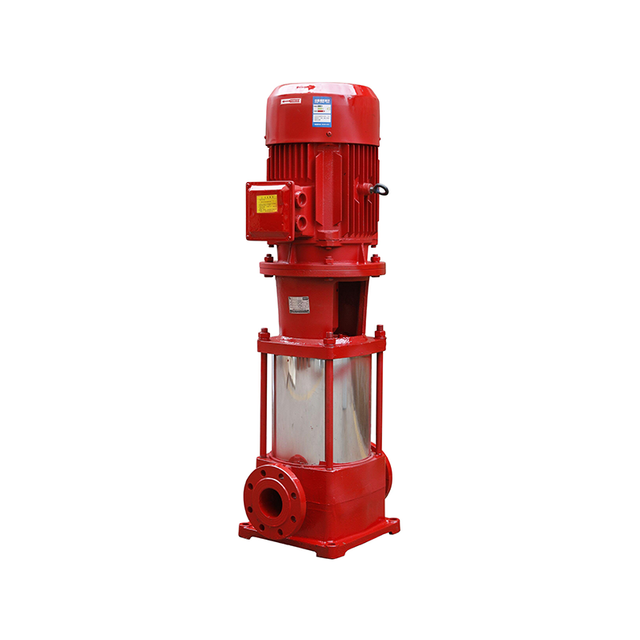
1.Core Conveying Function Realize efficient and stable horizontal pipeline transportation of clean liquids, meeting the requirements of pressurization, circulation and transportation in different scenarios. 2.Corrosion-Resistant Conveying Function With stainless steel flow-through components, it can safely transport weakly corrosive liquids and food-grade media, avoiding medium pollution and pump body damage. 3.Energy-Saving Pressurization Function Optimized hydraulic design, while achieving liquid pressurization, it has the characteristics of high efficiency and energy saving, reducing long-term operation costs. 4.Convenient Adaptation Function Horizontal direct-coupled structure, installed coaxially with the pipeline, no additional foundation required, can be directly adapted to the existing horizontal pipeline system, with convenient installation and maintenance. 5.Wide Temperature Adaptation FunctionCan transport liquids at -20℃~120℃, adapting to the transportation needs of different temperature working conditions. |
| Usage Environment |
1. Media Environment Suitable for cleaning liquids: clean water, soft water, mineral water, food-grade liquids, and mildly corrosive chemical liquids. Prohibited for conveying: liquids containing solid particles, fibers, impurities, as well as highly corrosive, high-temperature, and high-pressure special media. 2. Temperature environment Medium temperature: -20℃ ~ 120℃. Ambient temperature: -10℃ ~ 40℃, relative humidity ≤95% (non-condensing). 3. Installation Environment Horizontal installation, coaxially connected to pipelines, suitable for indoor or protected outdoor locations. The installation site must be flat, well-ventilated, free of dust, flammable or explosive gases, and subject to strong vibrations and impacts. 4. Operating Environment Suitable for low- to medium-pressure pipeline transportation systems, meeting the needs of pressurization, circulation, water supply and drainage, and other operating conditions. The power supply is stable, with voltage fluctuations within ±5% and a frequency of 50Hz/60Hz. |
| Product Advantages |
1.Stainless steel, corrosion-resistant 2.Horizontal direct connection, easy installation 3.High efficiency, low energy consumption 4.Compact structure, small footprint 5.Low noise, easy maintenance |
| Technical parameters |
| type | IHW Horizontal Stainless Steel Inline Pump |
| Material | Cast iron, stainless steel 304/316 |
| Driver type | electric |
| Installation type | Horizontal |
| Maximum caliber | DN300 (12 inches) |
| Maximum flow | 1200 m³/h |
| Maximum head | 125 m |
| Maximum power | 160 kW |
| Protection level | IP54 IP55 |
| Insulation class | F-level |
| Standard voltage | 380V, 220V, 440V, 660V |
| Product Uses |
1.Water treatment transport 2.Chemical material delivery 3.Food & beverage production 4.Pharmaceutical pure water transport 5.HVAC circulation 6.Industrial water supply & drainage 7.Boiler feed water 8.Agricultural irrigation |
| Product Operation Guide |
1. Installation Inspection Install horizontally, aligning the inlet and outlet pipes; confirm that the pump shaft is free from jamming and that the fasteners are secure; ensure reliable grounding. 2. Preparations before startup Open the inlet and outlet valves, fill the pump with medium, and purge the air from the pump; check that the power supply and voltage match the nameplate; the mechanical seal needs to be pre-lubricated. 3. Power-on operation Jog the motor to confirm that the direction of rotation matches the marking; after normal start-up, observe that the pressure and current are stable and there are no abnormalities. 4. Operation monitoring Real-time monitoring of pressure, flow rate, and motor temperature; maintaining clean media, preventing idling and cavitation; immediate shutdown upon abnormal noise. 5. Shutdown Procedure Turn off the power and wait for the pump to stop before closing the inlet and outlet valves. If the pump is to be shut down for an extended period, drain the medium from the pump and apply rust protection. |
| Frequently Asked Questions |
1. No flow/pressure: Insufficient priming, motor reversal, inlet blockage, impeller jamming. 2. Insufficient traffic/pressure: The problems include air leakage at the inlet, impeller wear, insufficient valve opening, and excessively high medium viscosity. 3. Motor overload: Operating beyond the rated flow rate, bearing damage, impeller-pump body friction, and high medium resistance. 4. High vibration and noise: Loose anchor bolts, impeller imbalance, bearing failure, and pipe resonance. 5. Seal leakage: Mechanical seal wear, loose/aged packing gland, and bent pump shaft. 6. Cavitation noise: Insufficient inlet pressure, pipe blockage, or excessively high medium temperature. |