close
Choose Your Site
Global
Social Media


 |


| Quantity: | |
|---|---|
Basic information of the product
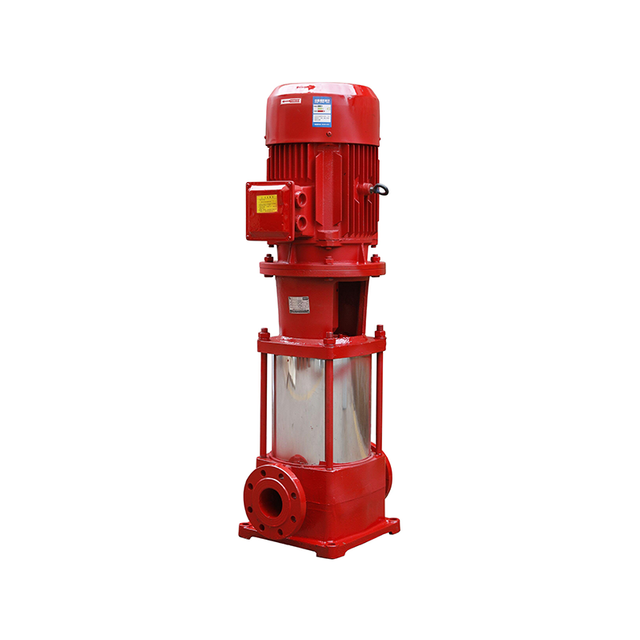
ISG vertical pipeline centrifugal pump is a single-stage single-suction vertical pipeline centrifugal pump with the advantages of high efficiency, energy saving, low noise and reliable performance. It is composed of impeller, pump body, pump shaft, bearing, sealing ring and stuffing box. The impeller of ISG vertical pipeline centrifugal pump is the core part of the centrifugal pump. It has high speed and high output force. The blades on the impeller play a major role. The impeller must pass the static balance test before assembly.
Usage Environment
1Suction pressure ≤1.0MPa, or the maximum working pressure of the pump system ≤1.6MPa, that is, the suction port pressure + pump head ≤1.6MPa, the pump static pressure test pressure is ≤2.5MPa, please indicate the system working pressure when ordering. When the pump system working pressure is greater than 1.6MPa, it should be separately proposed when ordering, so that the flow-through part and the connection part of the pump can be made of cast steel during manufacturing. 2. Ambient temperature <40℃, relative humidity <40%. 4. The volume content of solid particles in the conveyed medium does not exceed 0.1 per unit volume, and the particle size is <0.2mm. Note: If the medium used is fine particles, please indicate it when ordering so that our factory can use wear-resistant mechanical seals.
Product Advantages
High - Efficiency Vertical Single Stage Centrifugal Pump
High efficiency and energy saving: Advanced hydraulic model, efficient operation, reduced energy consumption, and long-term use to save electricity bills.
Reliable performance: Smooth operation and stable flow and head ensure that the conveying system continues to work efficiently.
Good sealing: adopts high-quality seals, prevents leakage, reduces maintenance, is safe and durable, and is suitable for a variety of working conditions.
Precise fit: Compact installation Advantages: Low noise and stable operation:
Technical Parameters
| Pump Type | Centrifugal pump, positive displacement pump, axial flow pump, mixed flow pump |
| Material | Pump body, impeller, shaft, seal |
| Drive type | Electric drive: |
| Maximum flow | 1600m³/h. |
| Maximum lift | 156m |
| Installation Type | Vertical |
| Maximum caliber | DN500mm |
| Maximum Power | 250KW |
| Protection level | IP44/IP54/IP55 |
| Insulation class | F |
| Standard voltage | 200-220V/346-380V, 220-240V/380-415V, 380-415V |
Product Usage
Building water supply and drainage:
In residential buildings, hotels and other buildings, it is used to transport water from the municipal water supply network or water tanks to each floor to meet people's daily water needs, such as supplying water to the kitchen, bathroom, etc.
Fire water supply:
In residential buildings, hotels and other buildings, it is used to transport water from the municipal water supply network or water tanks to each floor to meet people's daily water needs, such as supplying water to the kitchen, bathroom, etc.
Industrial fields:
Circulating water system: used to circulate cooling water or chilled water in the cooling system and air conditioning system of the factory. For example, in the production process of chemical, steel and other industries, the heat generated by the production equipment is removed by circulating water to maintain the normal operating temperature of the equipment.
Agricultural irrigation:
Farmland irrigation: water can be transported from water sources (such as rivers, reservoirs, wells) to various parts of farmland. According to different irrigation methods (such as sprinkler irrigation, drip irrigation) and farmland area, choose a pump with appropriate flow and lift
Product Operation Guide
Preliminary preparation: After receiving the goods, please immediately check whether the pump body is intact and whether there are any bumps, cracks or missing parts. At the same time, check the product manual to confirm that the pump model and specifications fully match your needs. It is recommended that you clean the installation site before installation, ensure that the foundation is firm and flat, and reserve enough space around it for subsequent operation and maintenance. In addition, choosing an ideal location for the pump body that is protected from direct sunlight, rain, and corrosive gases will significantly extend its service life and improve performance stability. Installation process
Pipe connection: Carefully follow the pipeline system design to connect the pump inlet and outlet, ensure that the pipeline diameter is accurately matched to the pump interface, and the connection is tight and well sealed to eliminate any risk of leakage. Use high-quality sealing materials and pipe fittings. Pay attention to providing reliable support for the pipeline during installation. Do not let the pump body bear additional pipeline weight to avoid affecting the normal operation and life of the pump. Start-up steps
Pump priming operation: Before starting, make sure the pump body is completely filled with liquid. Open the inlet valve and allow the liquid to flow naturally into the pump chamber until it overflows from the outlet pipe or exhaust hole, indicating that the pump body has been fully filled with liquid. For some systems that are sensitive to air, a vacuum pump can be used to assist in priming the pump to remove residual air in the pump and ensure smooth startup.
Valve adjustment: Close the outlet valve to reduce the load on the motor at the start-up moment. Then start the motor, wait until the motor runs smoothly (usually takes 10-15 seconds), slowly open the outlet valve, and pay close attention to the changes in motor current, pump pressure and flow, and gradually adjust them to the required working parameters. During this process, it is recommended to use tools such as ammeters and pressure gauges to ensure that all parameters are stable.
Frequently asked questions
1. Water leakage from mechanical seal
Causes of water leakage:
• Normal wear: The dynamic and static rings of the mechanical seal rub for a long time, and the sealing surface is worn. After long-term use, it may leak.
• Improper installation: When installing, there are impurities on the sealing surface, the position is inaccurate, or the seal is damaged, which will cause the mechanical seal to seal poorly and leak.
• Bad working conditions: When the pump transports liquids containing solid particles and corrosive substances, or operates under high temperature and high pressure, the mechanical seal is easily damaged and leaks.
• Solutions:
• Minor water leakage: Occasionally a few drops of seepage may be caused by impurities on the sealing surface or the beginning of wear. It can be operated for a short time and observed.
• Moderate water leakage: In the form of a thin stream, the sealing effect is reduced, and an opportunity should be found to stop the machine for maintenance.
• Severe water leakage: In the form of a jet, the mechanical seal has been seriously damaged. It is necessary to stop the machine immediately, replace a new mechanical seal that meets the pump model and working conditions, and install it correctly. At the same time, improve the operating conditions, such as installing a filter for liquids containing particles, pre-treating or changing materials for corrosive liquids, and optimizing parameters or adding protective devices for high temperature and high pressure conditions.
2. Reversal
Operation problems: insufficient pressure, reduced head, unstable flow or even reverse flow, affecting system operation. Component damage: reverse rotation causes abnormal stress on pump components, and bearings and seals are easily damaged, shortening their lifespan. Check motor wiring: stop the machine immediately if reverse rotation is found.
3. The motor is hot
Overload operation: The pump head is too high, the flow rate is too large, or the viscosity of the conveyed liquid is high, etc., and the motor is overloaded and hot. Check the operating parameters of the pump, adjust the valve to make the flow rate and head meet the requirements, or replace a high-power motor. Poor heat dissipation: The motor vents are blocked, the ambient temperature is high, or the fan failure affects the heat dissipation. Clean the vents, improve the ventilation conditions, check the fan, and ensure normal operation. Bearing problems: Bearings are worn and lack of oil, the friction increases, and the heat is transferred to the motor. Lubricating oil needs to be added regularly and worn bearings should be replaced in time. Abnormal voltage: The voltage is too high or too low, which makes the motor current unstable, the efficiency is reduced, and the heat is generated. Measure the voltage with a voltmeter, compare it with the rated value, and adjust it through a voltage stabilizer.
4. The water pump is noisy
Cause: Component friction: Impellers, bearings and other components are worn or installed incorrectly, rubbing against each other and making noise. Cavitation: Low pressure inside the pump, liquid vaporization produces bubbles that burst, making sharp noises. Pipeline resonance: Improper installation of pipelines resonates with the pump, increasing noise. Solution: Check components: Stop the machine for inspection, replace or calibrate worn components in time. • Anti-cavitation: Lower the installation height, clean the inlet pipeline, and adjust the operating parameters. Optimize pipelines: Check pipeline supports and install shock absorbers.