
close
Choose Your Site
Global
Social Media


This guide explains how to size a fire sprinkler system pump by matching building hydraulic demand with available water supply and verified pump performance. It covers flow calculations in GPM, pressure requirements in PSI, elevation and friction losses, hydrant flow testing, fire pump performance curves, the NFPA 20 150% rated-flow rule, and churn pressure risks. It also compares common fire pump configurations, electric and diesel drivers, jockey pump sizing, controller selection, and field acceptance testing to help engineers select a reliable, code-compliant fire protection pumping solution.

This guide explains how a fire pump and jockey pump work together to maintain reliable pressure and deliver emergency water flow in fire sprinkler systems. It compares their roles, activation sequences, sizing requirements, controller set points, common operating risks, and NFPA-related testing practices. Readers will learn why the jockey pump handles minor pressure losses while the fire pump responds to major demand, how poor sizing can cause short-cycling or continuous operation, and what maintenance steps help protect system performance, equipment life, and fire protection readiness.

Choosing between a diesel engine fire pump and an electric fire pump requires evaluating power reliability, hydraulic demand, pump room space, installation cost, maintenance, and NFPA 20 requirements. This guide compares both fire pump drivers across grid independence, backup power, fuel storage, electrical infrastructure, lifecycle costs, emissions, and operational risks. It also explains how facility constraints and AHJ requirements affect fire pump selection, helping engineers and facility managers determine which configuration provides the most reliable and practical fire protection solution for commercial and industrial buildings.

A horizontal split case fire pump is a reliable choice for high-flow commercial and industrial fire protection systems that require strong hydraulic performance, favorable NPSH characteristics, and convenient maintenance access. This guide explains when split case pumps are suitable, how their double-suction and between-the-bearings design improves performance, and how they compare with vertical in-line and end suction pumps. It also covers NFPA 20 requirements, UL/FM certification, foundation design, piping alignment, and driver selection, helping engineers choose and install the right high-capacity fire pump for demanding applications.

Choosing between a vertical fire pump and a horizontal fire pump depends on much more than flow and pressure requirements. This guide compares vertical inline, vertical turbine, horizontal split-case, and vertical split-case configurations based on pump room space, water source elevation, suction conditions, maintenance access, lifecycle costs, performance, and electric or diesel driver compatibility. It also reviews key installation risks and NFPA 20 considerations, helping engineers and facility managers select the most practical, reliable, and maintainable fire pump configuration for different fire protection applications.
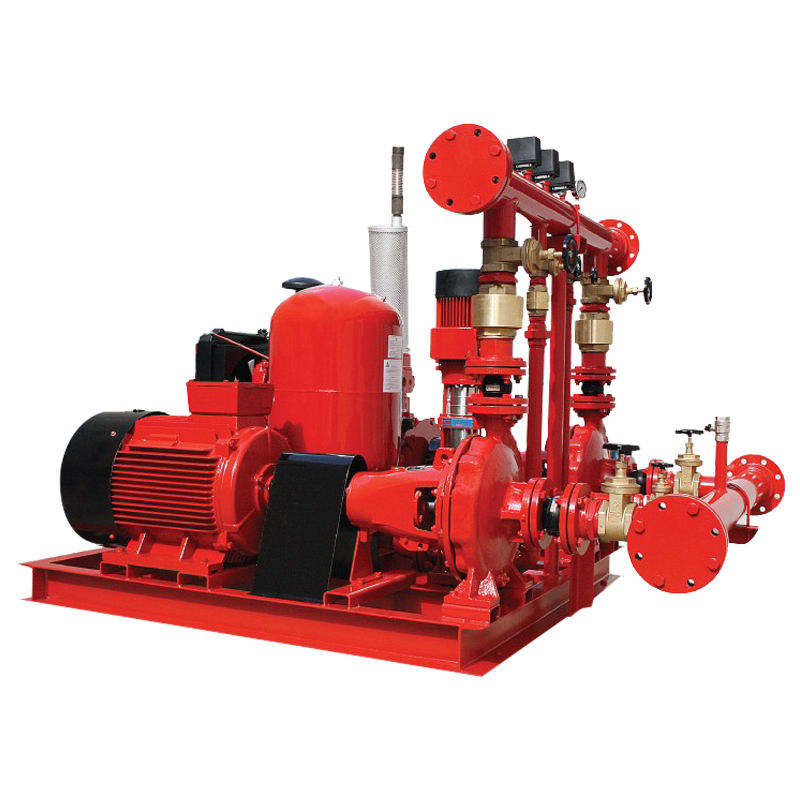
Fire safety demands reliable equipment that never fails. How can you ensure constant water supply during emergencies? EDJ type End Suction Fire Pump Units offer a dependable solution with dual electric and diesel power. In this post, you’ll learn about their design, importance in fire protection, an