
close
Choose Your Site
Global
Social Media


Views: 0 Author: Site Editor Publish Time: 2026-08-10 Origin: Site


Selecting the primary driver for a commercial or industrial fire protection system dictates the reliability of your entire life-safety infrastructure. Facility managers and engineers face a strict balancing act. You must meet rigid NFPA 20 codes while navigating physical building constraints and local utility limitations. A misaligned choice leads to bloated installation budgets, failed inspections, or catastrophic system failure during an emergency. Facility infrastructure constraints, long-term maintenance burdens, and the reliability of local utilities all play a part in this decision. Evaluating the exact spatial requirements, electrical demands, and fluid management protocols provides the field-tested data necessary to align your pump selection with your building's hazard classification and operational capabilities. The choice between compression ignition and electric motors impacts every phase of construction, from initial pump room sizing to decades of ongoing maintenance.
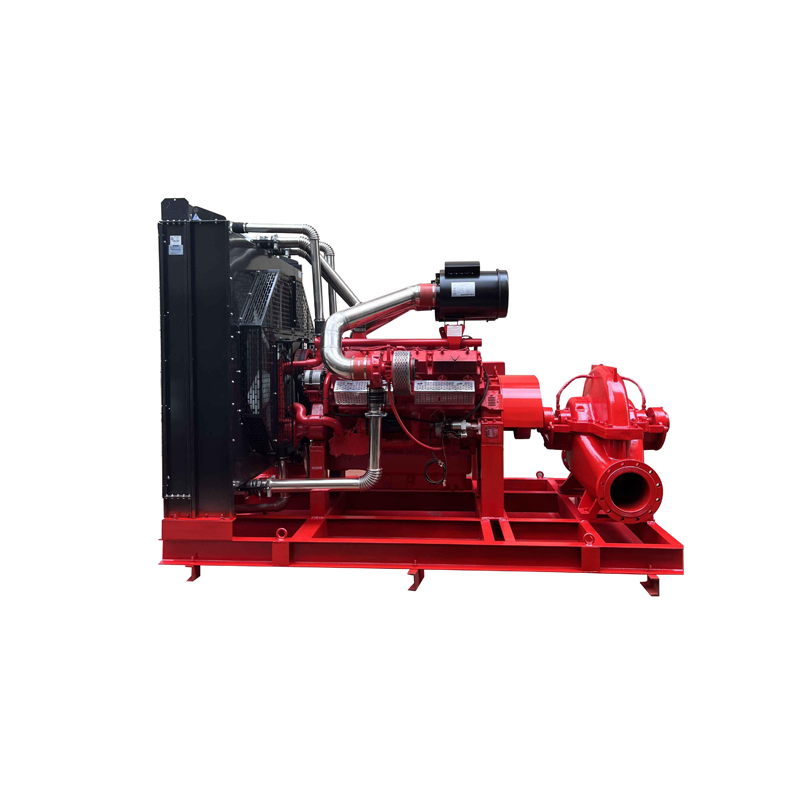
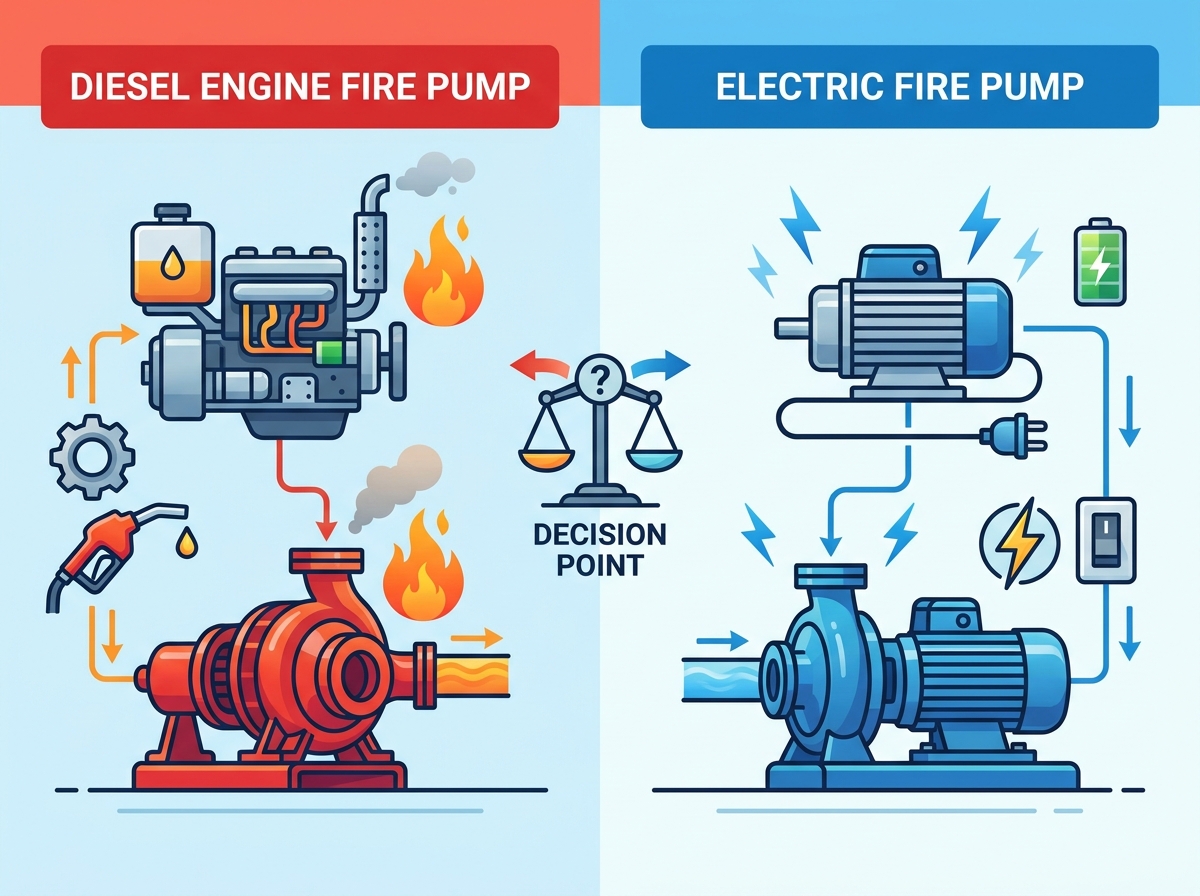
Grid Independence vs. Simplicity: A diesel engine fire pump offers unmatched reliability during total power grid failures without requiring a secondary electrical source, whereas electric pumps offer mechanical simplicity and a smaller footprint.
Infrastructure Demands: Diesel systems require complex exhaust routing, dedicated distillate fuel oil storage, and ventilation, making them difficult to retrofit in subterranean or landlocked pump rooms.
Hidden Costs of Electric: While electric fire pumps generally have lower upfront equipment costs, the requirement for a secondary power source (like a massively upsized backup generator and automatic transfer switch) can quickly make them the more expensive overall option.
Maintenance Realities: Diesel drivers demand rigorous, active maintenance (fuel polishing, battery checks, weekly runs), while electric drivers require specialized electrical testing and are highly dependent on the facility's power quality.
Table of Contents
Every stationary fire pump installation must strictly adhere to the National Fire Protection Association (NFPA) 20 standard. This comprehensive document governs the entire installation process. It dictates pump room construction fire ratings, equipment clearances, and specific driver requirements. NFPA 20 serves as the absolute baseline for life-safety compliance. However, the local Authority Having Jurisdiction (AHJ) holds the final approval power over your design. The AHJ interprets the code based on specific regional conditions and historical data. They evaluate the historical reliability of the municipal power grid feeding your facility. If the AHJ deems the local grid unreliable due to frequent weather events or rolling blackouts, they will mandate secondary power sources for electric drivers. This single ruling often dictates the entire pump selection process. You must engage the AHJ early in the schematic design phase. Waiting until the equipment procurement stage guarantees costly redesigns and severe project delays.
Your facility's specific hazard classification directly determines the required hydraulic demand of the sprinkler system. A standard commercial office building requires significantly less water volume than a distribution warehouse storing high-piled combustible plastics. Fire protection engineers perform detailed hydraulic calculations to establish the necessary flow rate in gallons per minute (GPM) and pressure in pounds per square inch (PSI). High-hazard facilities demand massive flow rates to supply Early Suppression Fast Response (ESFR) sprinkler heads. These high flow rates require large pump impellers and immense rotational torque from the driver. As horsepower requirements scale up to meet these demands, the feasibility of electric drivers often decreases. Large electric motors draw massive starting currents that place immense strain on the building's electrical infrastructure. High-horsepower compression ignition engines handle these heavy hydraulic loads efficiently without requiring massive electrical switchgear upgrades.
Physical and infrastructural limitations narrow down your driver options immediately during the feasibility study. You must evaluate three primary constraints before selecting a driver type. First, assess the available electrical service capacity at the site. Determine if the building's main switchgear and the utility transformer can handle the locked-rotor amps of a large electric motor without causing severe voltage drops. Second, evaluate the physical pump room location within the architectural plans. A subterranean pump room poses severe challenges for exhaust routing and combustion air intake. Landlocked rooms situated in the core of a building make liquid fuel delivery nearly impossible. Third, consider your on-site maintenance capabilities. Facility teams must possess the technical skills to maintain the chosen system. Complex mechanical systems require dedicated, ongoing attention to remain compliant and functional over their operational lifespan.
The defining advantage of a diesel engine fire pump is absolute grid independence. These systems provide autonomous fire protection regardless of the municipal utility status. They do not rely on external power grids, nor do they require secondary electrical generators to function during an outage. Once the starting sequence initiates via the battery banks, compression ignition engines require no electrical spark to maintain operation. This mechanical simplicity under heavy load offers unmatched reliability. During severe natural disasters like hurricanes or earthquakes, utility power often fails. Transformers blow, and overhead power lines fall. In these catastrophic scenarios, a dedicated internal combustion driver ensures the sprinkler system remains fully pressurized. Furthermore, these engines deliver exceptional low-end torque. This torque easily overcomes the inertia of massive water columns in extensive underground piping networks.
Installing an internal combustion driver requires significant architectural planning and spatial allocation. You must accommodate complex fluid storage and air management systems within the pump room.
Fuel Storage Sizing: NFPA 20 dictates strict fuel tank capacities to ensure adequate run times. The rule requires one gallon of usable capacity per engine horsepower. You must then add 5% for thermal expansion and another 5% for the tank sump. A 300-horsepower engine requires a 330-gallon tank minimum.
Spill Containment: Environmental regulations mandate the use of double-wall fuel tanks. You must also construct secondary spill containment basins around the tank footprint. These concrete basins prevent catastrophic leaks from contaminating local groundwater or entering the municipal sewer system.
Exhaust Routing: You must route exhaust piping directly to the building exterior. This piping requires specialized thermal insulation to protect adjacent combustible building materials from extreme heat. Engineers must calculate exhaust backpressure carefully. Excessive backpressure degrades engine performance and violates emissions standards.
Ventilation Systems: The pump room requires massive volumes of combustion air to feed the engine. You must install motorized dampers tied directly to the pump controller. Additionally, the room needs adequate cross-ventilation to dissipate the intense radiant heat generated by the engine block and exhaust manifold.
Mechanical autonomy comes with rigorous maintenance obligations. NFPA 25 mandates strict inspection, testing, and maintenance protocols to ensure the engine starts immediately during an emergency.
Weekly Run Tests: You must run the engine for 30 minutes every week under no-flow conditions. This churn test ensures proper internal lubrication, verifies the starting sequence reliability, and confirms the cooling loop operates correctly.
Fuel Degradation: Distillate fuel oil degrades naturally over time. Temperature fluctuations introduce condensation into the tank. This water promotes microbial growth at the fuel-water interface. Microbes create a thick sludge that clogs fuel filters rapidly during emergencies. You must implement routine fuel polishing and quarterly sampling.
Cold Weather Risks: In cold climates, standard fuel can gel, blocking lines and filters. You must use appropriate winter fuel blends. The engine block heater requires constant monitoring to ensure the block remains at the manufacturer's specified starting temperature.
Battery Maintenance: Starting batteries represent the most common point of failure for these systems. You must check electrolyte levels, clean terminal corrosion, and replace batteries strictly according to the NFPA 25 schedule, regardless of their apparent condition.
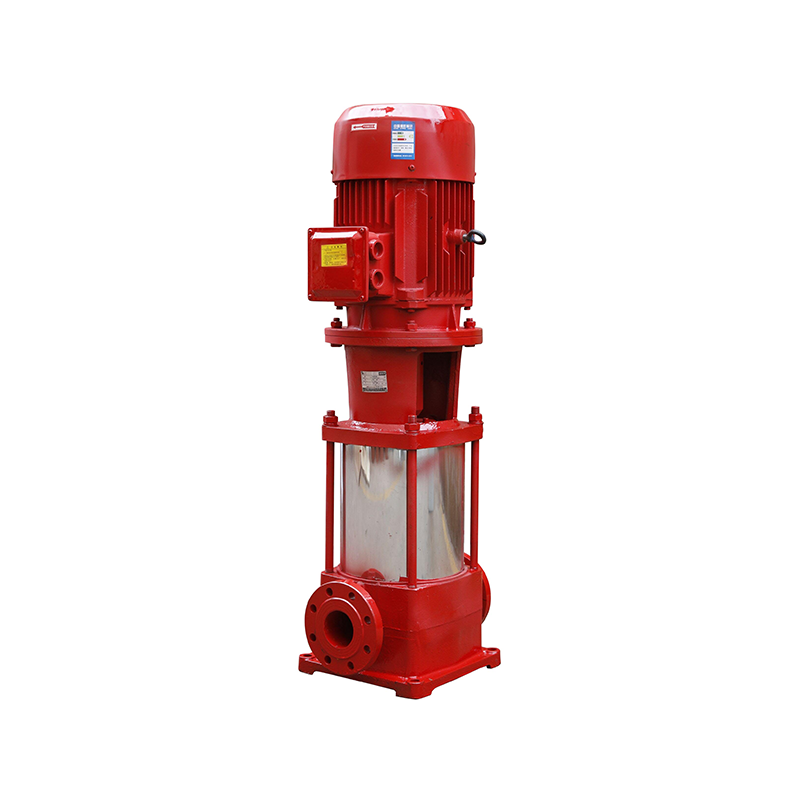
Electric drivers offer a streamlined approach to fire protection design. Their primary advantage is a significantly smaller physical footprint compared to internal combustion options. They eliminate the need for bulky fuel tanks, massive exhaust silencers, and complex raw-water cooling loops. This spatial efficiency makes them ideal for tight urban environments, retrofits, and high-rise commercial buildings where square footage is highly restricted. Electric motors operate quietly, minimizing acoustic disruptions in occupied buildings. They produce zero on-site emissions, which eliminates the need for complex EPA air quality permitting and exhaust dispersion modeling. From an operational standpoint, electric motors are mechanically simple. They contain far fewer moving parts than internal combustion engines. This mechanical simplicity reduces the frequency of active, hands-on maintenance tasks for the facility staff.
While physically smaller, electric systems demand highly robust electrical infrastructure. You must provide a dedicated, highly reliable power feed directly from the utility transformer. This feed must bypass the building's main disconnect switch. This specific routing ensures the pump retains power even if the fire department cuts general building electricity during an active fire event. The installation requires heavy-duty, fire-rated electrical conduits. You must often encase these primary conduits in two inches of concrete or utilize specialized two-hour fire-rated mineral-insulated (MI) cables. You must install specialized fire pump controllers designed to handle massive electrical loads. Modern installations frequently utilize Variable Frequency Drives (VFDs) within the controller. VFDs slowly ramp up the motor speed rather than starting across-the-line. This soft-start capability prevents massive pressure surges in the system. It eliminates water hammer, which can easily rupture aging sprinkler pipes or dislodge underground fittings.
The inherent simplicity of an electric driver disappears entirely if the AHJ deems the primary power grid unreliable. NFPA 20 requires a reliable power source for all fire protection systems. If the local grid fails this strict reliability test, you must install a secondary power source. This requirement triggers the backup power dilemma.
Automatic Transfer Switches (ATS): You must install a specialized, fire-pump-rated ATS. This device constantly monitors utility voltage. It senses utility failure and automatically transfers the massive pump load to the backup generator.
Generator Sizing Challenges: Sizing a standby generator for a fire pump is notoriously difficult. Electric motors draw a massive inrush current upon startup. This is known as locked-rotor amps (LRA). LRA can easily reach 600% of the motor's full-load running current.
Oversized Equipment: To handle this massive transient load without stalling the alternator or causing a severe voltage dip, the backup generator must be significantly oversized. A relatively small 150-horsepower electric motor might require a 500kW or larger generator. This massively inflates the required floor space, structural support requirements, and initial capital investment.
Evaluating the initial financial outlay requires looking far beyond the base equipment invoice. Out-of-the-box, an electric motor and pump skid costs significantly less than a comparable compression ignition skid. However, total installed costs often tell a completely different story. If your facility already possesses a highly reliable power grid and requires no backup power, the electric option remains the most economical choice. The dynamic shifts entirely when secondary power is mandated by the AHJ. Adding a massive standby generator, a fire-pump-rated ATS, concrete-encased duct banks, and heavy-gauge copper wiring rapidly escalates the installation budget. In these specific scenarios, the internal combustion option often presents a lower total upfront capital expenditure, despite the added costs of fuel tanks and exhaust piping.
Lifecycle expenses diverge significantly between the two technologies over a standard 20-year operational span. Internal combustion systems require active, fluid-based maintenance. You must account for regular oil changes, coolant flushes, fuel polishing, and frequent filter replacements. The mandatory weekly 30-minute run tests consume fuel and generate mechanical wear and tear on moving components. Conversely, electric systems require passive maintenance. They do not consume consumable fluids during testing. Maintenance focuses heavily on electrical integrity rather than mechanical wear. You must perform annual infrared thermography on all electrical connections to detect dangerous hotspots. You must test the ATS functionality and verify motor insulation resistance using a megohmmeter. While electric maintenance is less frequent, it requires highly specialized electrical contractors rather than general mechanics.
Square footage is a premium commodity in modern facility design and construction. Electric systems dominate in spatial efficiency. They fit easily into compact subterranean rooms or tight mechanical penthouses. Internal combustion systems demand expansive architectural layouts. You must allocate dedicated space for the skid, the fuel tank, spill containment, and clearance for exhaust routing. Environmental compliance also plays a major role in the selection process. Modern compression ignition engines must meet stringent EPA Tier 3 or Tier 4 emission standards. This often requires advanced exhaust aftertreatment systems like diesel particulate filters (DPF) or selective catalytic reduction (SCR) units. Local noise ordinances may dictate the use of critical-grade exhaust silencers. These silencers are massive, heavy, and require dedicated structural supports suspended from the ceiling.
Evaluation Criteria | Diesel Engine Fire Pump | Electric Fire Pump |
|---|---|---|
Power Source Dependency | Completely independent; utilizes on-site liquid fuel storage. | Highly dependent on utility grid reliability or backup generator. |
Spatial Footprint | Large; requires fuel tank, exhaust routing, and extensive ventilation. | Compact; requires minimal clearance beyond the skid and controller. |
Maintenance Profile | Active mechanical; fluid changes, fuel polishing, weekly 30-minute runs. | Passive electrical; thermography, ATS testing, insulation resistance checks. |
Emissions & Noise | Produces on-site exhaust; requires specialized critical-grade silencers. | Zero on-site emissions; minimal operational noise and vibration. |
Backup Power Needs | None required; inherently autonomous. | Requires massive generator if utility is deemed unreliable by AHJ. |
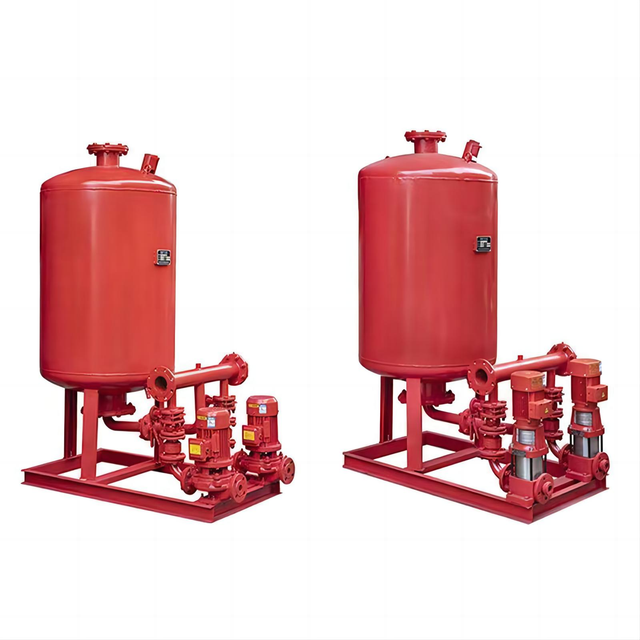
The primary risk associated with internal combustion drivers is fuel failure. Degraded fuel will stall an engine during a critical fire event, rendering the sprinkler system useless. You mitigate this risk through aggressive, proactive fuel management. Install automated fuel polishing systems that continuously cycle and filter the stored distillate oil to remove water and particulates. Implement a rigorous schedule of quarterly fuel sampling to test for microbial growth and water content. In regions experiencing freezing temperatures, strictly utilize winterized fuel blends to prevent gelling in the lines. The secondary risk is starting failure due to dead batteries. Mitigate this by enforcing a strict replacement schedule. Do not wait for batteries to fail load testing; replace them preemptively every 24 to 36 months. Maintain redundant battery chargers and verify their output voltage during every weekly inspection.
Electric systems face two primary risks: power loss and controller failure. Power loss during a fire event renders the system completely inoperable. Mitigate this by ensuring the utility feed is physically protected from fire damage. Encase primary conduits in concrete or utilize two-hour fire-rated cables routed outside the primary fire zones. If utilizing a backup generator, perform rigorous, full-load ATS testing monthly. Verify the generator can handle the massive locked-rotor amps without tripping breakers or stalling. Controller failure often results from power surges or degraded internal components. Mitigate this by installing robust surge protection devices at the main electrical service entrance. Conduct routine infrared thermography on all fire pump controller connections to identify loose lugs or failing contactors before they cause a catastrophic short circuit.
Consult a licensed Fire Protection Engineer (FPE) to perform a comprehensive hydraulic calculation based on your specific hazard classification and building height.
Request a formal utility reliability study from your local power provider and submit it directly to the AHJ for review before selecting a driver.
Conduct a spatial analysis of your proposed pump room to verify clearances for fuel tanks, exhaust runs, and electrical switchgear.
Evaluate your internal maintenance team's capabilities to determine if mechanical fluid upkeep or electrical testing aligns better with their skill sets.
Shanghai Diequan Water Pump (Group) Co., Ltd. specializes in the design, development, manufacturing, and supply of fluid equipment, with a broad portfolio covering fire pumps, centrifugal pumps, water supply equipment, and related pump control solutions. Supported by product development, quality management, customization, and installation and commissioning services, the company provides integrated pumping solutions for applications ranging from building water supply and drainage to industrial and fire protection systems.
A: Run times are dictated by NFPA 20 fuel supply requirements. Tanks are typically sized to provide 8 to 24 hours of continuous operation at full load. The exact duration depends on the facility's specific hazard classification and the engine's horsepower rating. High-hazard facilities require larger tanks to sustain longer firefighting operations.
A: These engines require standard #2 distillate fuel oil. You must strictly avoid biodiesel blends. Biodiesel degrades rapidly during long-term storage, promotes microbial growth, and clogs fuel filters. This degradation can cause catastrophic engine failure during an emergency when the pump is under heavy load.
A: No. It depends entirely on the Authority Having Jurisdiction (AHJ). If the AHJ evaluates the primary municipal utility grid and deems it reliable, a secondary power source is not required. If deemed unreliable, a backup generator and an automatic transfer switch become mandatory for code compliance.
A: A well-maintained commercial fire pump typically lasts 20 to 25 years, and often longer. This lifespan assumes strict, unwavering adherence to all NFPA 25 inspection, testing, and maintenance standards. You must perform routine component replacements, fluid management, and annual flow testing to achieve this longevity.
A: Yes, but retrofitting is highly complex and structurally demanding. You must drastically modify the pump room infrastructure. This includes installing double-wall fuel storage, routing high-temperature exhaust piping to the exterior, and upgrading the room's ventilation to handle massive combustion air requirements and radiant heat.
A: NFPA 25 mandates a strict testing schedule. The engine must undergo a 30-minute no-flow churn test every single week to verify starting reliability. Additionally, the entire system must undergo a comprehensive full-flow test annually to verify it meets the original hydraulic performance curves.


