
close
Choose Your Site
Global
Social Media


Views: 0 Author: Site Editor Publish Time: 2026-08-10 Origin: Site


Specifying a fire pump configuration represents a critical life-safety and facility design decision. The wrong layout often leads to severe maintenance bottlenecks or spatial conflicts down the line. Facility footprint constraints, water supply realities, and long-term maintenance budgets create constant tension when choosing between a vertical fire pump and a horizontal fire pump. Horizontal pumps frequently serve as the industry default for general applications. Vertical configurations, however, solve highly specific spatial and draft challenges.
Selecting the correct pump requires more than just matching flow rates. Engineers must evaluate the physical pump room dimensions, the elevation of the water source, and the lifecycle maintenance capabilities of the facility team. This guide evaluates both configurations through the lens of NFPA 20 standards, financial considerations, and practical implementation realities. We will break down the engineering mechanics of each pump type to facilitate an evidence-based selection process.
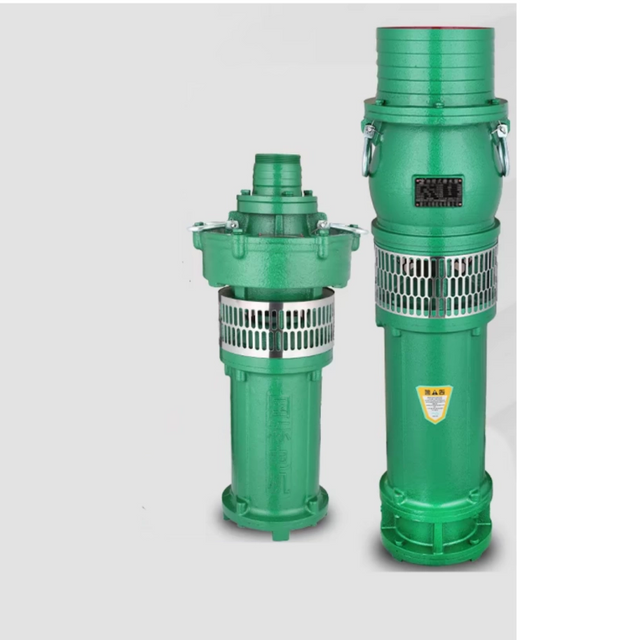
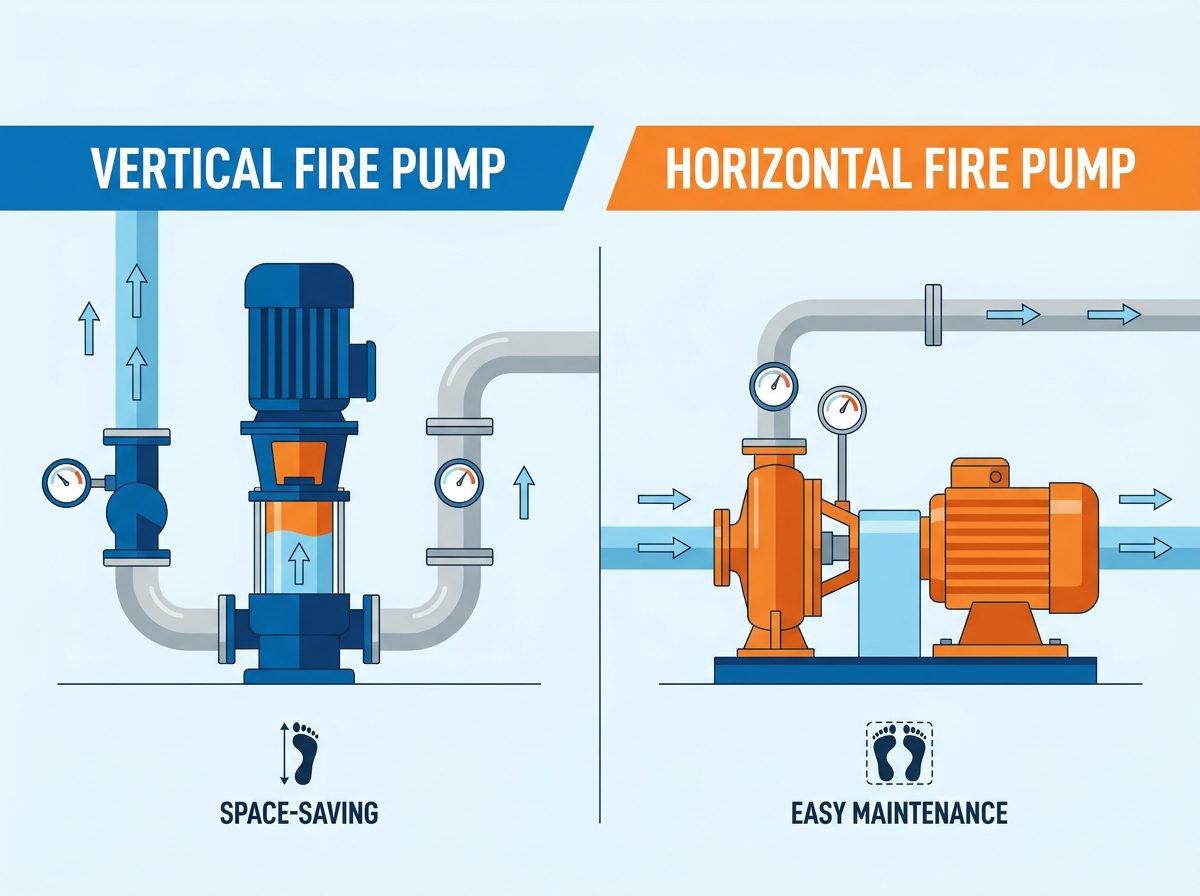
Spatial vs. Maintenance Trade-off: A vertical fire pump drastically reduces floor space requirements but demands overhead clearance and specialized lifting equipment for internal maintenance, whereas horizontal pumps consume more floor space but offer superior, simplified accessibility.
Water Source Dictates Design: Vertical turbine pumps are mandatory for applications requiring negative draft (drawing water from below-grade tanks), while horizontal pumps require a positive suction head.
Lifecycle Cost Variance: While vertical inline pumps may present a lower initial capital expenditure (CapEx), the operational expenditure (OpEx) for maintenance and repairs is typically higher compared to horizontal split-case models.
The Hybrid Solution: Horizontal split-case pumps can actually be mounted vertically (Vertical Split-Case) to save floor space while retaining the maintenance benefits of a split casing.
Compliance and Performance: Both configurations fully comply with NFPA 20 when properly specified, but driver compatibility (electric vs. diesel) and flow requirements heavily influence the final selection.
Table of Contents
The vertical shaft configuration places the driver directly above the pump casing. This design aligns the rotating shaft vertically, minimizing the horizontal footprint of the equipment. It remains one of the most common and space-efficient solutions for commercial properties. Engineers typically specify these units when mechanical room square footage is severely restricted. The vertical alignment transfers the weight of the motor straight down through the pump housing or discharge head, requiring a smaller but highly reinforced mounting surface.
You must differentiate between two distinct vertical designs: Vertical Inline Pumps and Vertical Turbine Pumps. Vertical inline models are highly compact. The pump casing fits directly into the straight piping line, much like a large valve. The motor sits on top of the casing. These units strictly require a positive suction pressure. Water must flow into the pump under its own pressure. Vertical turbine pumps operate entirely differently. They feature submerged impellers housed in bowl assemblies. A vertical column pipe connects the submerged bowls to the surface discharge head. The motor mounts on this surface head, driving a long line shaft that reaches down into the water source.
Typical use cases vary based on the specific vertical design. Vertical inline pumps dominate high-rise commercial buildings and urban retrofits. They fit easily into tight corners or narrow mechanical corridors where traditional baseplates cannot fit. Vertical turbine pumps serve a completely different purpose. Facilities utilize them when drawing water from underground storage tanks, wet pits, or natural bodies of water. They keep the impellers submerged, eliminating the need for priming and ensuring immediate water delivery upon activation.
The horizontal shaft configuration aligns the pump and driver horizontally along the floor. The motor and the pump sit side-by-side. They mount together on a shared, rigid steel baseplate. This layout represents the standard choice for most broad fire protection applications. The horizontal orientation provides straightforward access to all major mechanical components from ground level, eliminating the need for overhead lifting equipment during routine inspections.
Horizontal pumps primarily utilize Horizontal Split-Case and End-Suction designs. End-suction pumps pull water directly into the end of the casing and discharge it out the top. They suit smaller flow requirements and simpler piping arrangements. Horizontal split-case pumps handle much larger capacities. The casing splits horizontally along the shaft centerline. Water enters the casing and splits to enter both sides of a double-suction impeller. This balances hydraulic thrust, extends bearing life, and allows for massive water displacement without excessive vibration.
Engineers also utilize a hybrid variation known as the Vertical Split-Case pump. This configuration takes an electric-driven horizontal split-case pump and mounts it vertically. The motor sits above the pump, reducing the floor footprint. However, the casing still splits axially. This allows technicians to remove the casing half and access the rotating assembly without disturbing the motor. It offers a practical compromise between space savings and maintenance access for facilities with tight floor plans but adequate ceiling height.
Typical use cases for horizontal pumps include sprawling industrial facilities, large distribution warehouses, and expansive corporate campuses. These sites usually feature dedicated, spacious fire pump rooms. They also typically utilize large above-ground water storage tanks or robust municipal connections, ensuring the necessary positive suction head for horizontal operation.
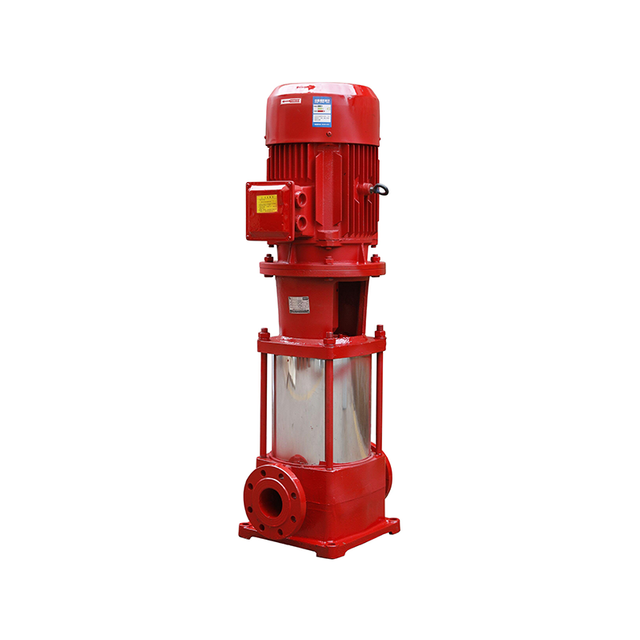
Floor space availability heavily influences pump selection. A vertical fire pump delivers massive floor space savings. Vertical inline models often require 30 to 50 percent less square footage than traditional side-by-side configurations. The inline design eliminates the need for a massive baseplate. It also simplifies piping layouts, as the suction and discharge flanges share the same centerline. This allows engineers to squeeze robust fire protection systems into cramped basement mechanical rooms or retrofitted utility closets.
However, designers frequently overlook the strict requirement for vertical clearance. Vertical pumps demand significant headroom. Technicians must lift the heavy electric motor straight up to access the pump internals. For vertical turbine pumps, the clearance requirements are even more extreme. Crews must hoist the entire rotating assembly, shaft sections, and bowl assemblies vertically out of the pit. If the ceiling is too low, internal maintenance becomes physically impossible without demolishing the roof or cutting access hatches.
Horizontal pumps demand a much larger footprint. The side-by-side layout requires a substantial concrete housekeeping pad. The baseplate must support the full weight of the motor, pump, and heavy couplings. Furthermore, horizontal setups require wider clearances for piping manifolds. NFPA 20 mandates specific straight-pipe runs before the suction flange to prevent turbulent water flow. These straight runs consume significant horizontal space, expanding the required dimensions of the pump room considerably.
Design Metric | Vertical Inline Pump | Vertical Turbine Pump | Horizontal Split-Case Pump |
|---|---|---|---|
Floor Space Required | Minimal (Fits in piping line) | Small (Discharge head only) | Large (Requires wide baseplate) |
Overhead Clearance | High (Motor removal) | Extreme (Shaft/bowl removal) | Low (Standard room height) |
Piping Complexity | Low (In-line flanges) | Medium (Underground draft) | High (Straight-run requirements) |
Foundation Needs | Standard pipe supports | Reinforced pit/slab | Massive concrete housekeeping pad |
The elevation of your water source dictates your pump options. A critical engineering rule governs this selection. Horizontal pumps and vertical inline pumps must operate with a positive suction head. The water level in the supply tank must remain above the pump centerline at all times. Water must flow naturally into the pump casing via gravity. If the water level drops below the pump, the system loses prime. A dry horizontal pump will cavitate, overheat, and fail catastrophically during a fire event.
NFPA 20 strictly prohibits the use of horizontal pumps for negative draft applications. You cannot use a horizontal split-case pump to suck water up from an underground tank. The code does not allow foot valves or priming systems for fire pumps. The system must remain instantly ready to pump water without manual intervention, vacuum pumps, or priming delays.
The vertical turbine fire pump stands as the only NFPA 20-compliant solution for negative draft conditions. Facilities drafting from a wet pit, underground reservoir, or river must specify a vertical turbine. The bowl assemblies sit deep underwater. The impellers remain permanently submerged. When the motor activates, the pump instantly pushes water up the column pipe and into the fire protection network. No priming is ever required, ensuring immediate and reliable water delivery to the sprinkler system.
Maintenance accessibility serves as a primary differentiator in long-term facility management. Routine inspections, packing replacements, and internal overhauls dictate the lifecycle viability of the equipment. Horizontal pump maintenance is generally straightforward. The split-case design is simpler and far less troublesome for facility teams. Technicians can remove the top half of the casing to expose the entire rotating assembly.
To understand the maintenance disparity, consider the standard procedure for inspecting the rotating assembly on a horizontal split-case unit:
Isolate the pump by closing the suction and discharge control valves.
Drain the casing using the lower petcocks to remove residual water.
Remove the coupling guard and disconnect the flexible coupling between the motor and pump.
Unbolt the upper casing half and lift it away using a standard chain fall.
Inspect or remove the entire rotating assembly without moving the motor or disconnecting any main piping flanges.
This horizontal accessibility is unmatched. Mechanics can inspect impellers, replace wear rings, and swap out bearings without disturbing the heavy suction or discharge piping. The alignment between the driver and the pump remains intact. This drastically reduces downtime and labor hours during major service intervals.
Conversely, performing the same internal inspection on a vertical inline pump requires a much more invasive process:
Isolate and drain the pump casing completely.
Disconnect all electrical conduits and heavy-gauge wiring from the top-mounted motor.
Rig the motor to an overhead gantry crane and unbolt it from the motor stand.
Lift the heavy motor completely clear of the pump and set it aside on the floor.
Rig the rotating assembly, unbolt the stuffing box cover, and pull the entire shaft and impeller straight up and out of the casing.
For vertical turbine pumps, the process is even more labor-intensive. Technicians must pull the heavy column pipe out of the pit section by section. They must unthread shafts and unbolt heavy flanges while suspended over an open pit. This complex rigging requires specialized contractors, heavy machinery, and significantly increases system downtime during repairs.
Evaluating the financial impact requires comparing initial procurement against long-term operational expenses. Vertical inline pumps often present a lower initial capital expenditure (CapEx). The equipment itself is compact and requires less raw material to manufacture. Installation costs are also lower. Contractors spend less time pouring massive concrete pads or executing complex laser alignments. The inline piping configuration reduces the number of heavy steel fittings and elbows required in the mechanical room.
Horizontal split-case pumps require a higher initial investment. The heavy cast-iron baseplates, flexible couplings, and complex casing designs increase manufacturing costs. Installation demands precise leveling and grouting of the baseplate. Contractors must perform rigorous shaft alignment procedures to prevent premature bearing failure. The larger footprint also means the facility must dedicate more expensive square footage to the pump room, increasing the overall construction budget.
However, long-term operational expenditures (OpEx) heavily favor horizontal configurations. Horizontal pumps yield significantly lower labor hours for inspections, seal replacements, and internal repairs. A two-man crew can overhaul a horizontal split-case pump in a single shift using standard hand tools. Over a 20-year lifecycle, these reduced labor costs easily offset the higher initial footprint and procurement expenses. Vertical pumps, requiring cranes and specialized rigging teams for internal repairs, drain maintenance budgets rapidly during major overhauls.
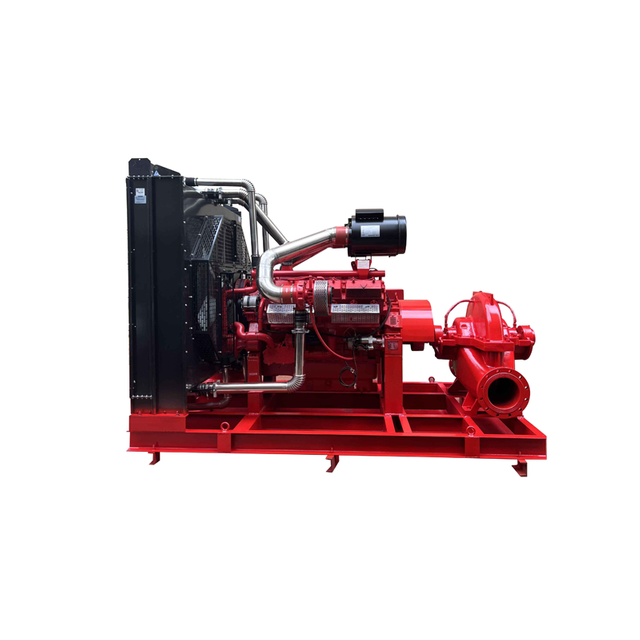
Hydraulic coverage varies significantly between configurations. Engineers must match the pump type to the specific flow and pressure demands of the hazard. Horizontal split-case pumps generally accommodate massive flow requirements with high efficiency. Their double-suction impeller design allows large volumes of water to enter the pump smoothly from both sides. Facilities requiring 2,500 to 5,000+ gallons per minute (GPM) rely heavily on horizontal split-case units to meet demand without excessive cavitation.
Vertical inline pumps typically serve lower to medium flow applications. They max out around 1,500 GPM in most standard commercial catalogs. Pushing massive flows through an inline casing creates excessive turbulence and velocity issues. Therefore, inline pumps remain best suited for standard office buildings, residential high-rises, or smaller commercial footprints where flow demands remain moderate.
Pressure staging sets vertical turbine pumps apart. When a facility requires extremely high discharge pressures, vertical turbines excel. Manufacturers simply add more bowl assemblies to the submerged pump shaft. Each bowl acts as a separate pressure stage. Water passes from the first impeller into the second, increasing pressure sequentially. This multi-stage capability makes vertical turbines ideal for deep-well applications or massive high-rise standpipe systems requiring immense pressure to overcome gravity and pipe friction.
Driver compatibility heavily influences pump selection, especially in areas with unreliable electrical grids. Horizontal pumps easily accommodate both electric motors and diesel engines. The horizontal shaft aligns perfectly with standard diesel engine output shafts. Manufacturers connect the engine to the pump using a heavy-duty flexible coupling. This straightforward mechanical connection makes diesel-driven horizontal pumps the standard for heavy industrial applications, remote warehouses, and facilities requiring independent backup power.
Driver pairing for vertical pumps presents unique challenges. Vertical inline pumps are exclusively electric. You cannot mount a diesel engine vertically on top of an inline pump casing. If a facility requires a diesel driver but lacks floor space, an inline pump is not a viable option. The engineering simply does not support a vertical diesel configuration.
Vertical turbines can be driven by diesel engines, but the integration is complex. The diesel engine sits horizontally on the floor, while the pump shaft runs vertically into the pit. Connecting them requires a specialized right-angle gear drive. This heavy gearbox mounts on top of the discharge head. It transfers the horizontal rotation of the engine shaft into vertical rotation for the pump shaft. This right-angle drive increases mechanical complexity, introduces new points of failure, requires dedicated cooling lines, and significantly raises the initial equipment expenditure.
Installing vertical equipment introduces specific structural and mechanical risks. The most common risk involves inadequate overhead clearance for future maintenance. Contractors frequently install a vertical fire pump in tight basements, ignoring the space needed to pull the motor. When the pump eventually requires a rebuild, the facility faces a crisis. They cannot lift the components out of the casing without structural demolition.
To mitigate this risk, engineers must mandate the installation of a permanent overhead hoist or gantry crane during the pump room design phase. The structural ceiling must support the dynamic load of the lifted motor and rotating assembly. Installing a fixed lifting beam directly above the pump centerline ensures maintenance teams can safely execute future repairs without renting specialized lifting frames.
Vibration and resonance issues present another major risk for vertical shafts. A tall motor sitting on top of a narrow pump casing acts like a pendulum. If the base is not perfectly rigid, the entire assembly will vibrate excessively. This destroys mechanical seals and bearings rapidly. Mitigation requires strict adherence to manufacturer specifications for baseplate grouting. Contractors must use high-strength, non-shrink epoxy grout. Furthermore, the rotating assembly must undergo rigorous dynamic balancing at the factory to eliminate harmonic resonance before it ever reaches the job site.
Horizontal installations face their own distinct mechanical challenges. Shaft misalignment between the pump and the driver stands as the primary cause of premature failure. Even a few thousandths of an inch of misalignment will destroy the flexible coupling and wreck the pump bearings. Misalignment often occurs during the grouting process when the heavy baseplate warps slightly under the weight of the wet concrete.
Mitigation requires precise laser alignment during initial commissioning. Contractors must align the shafts before grouting, check them again after the grout cures, and perform a final hot alignment check after the pump reaches operating temperature. Relying on simple straight-edges or dial indicators is no longer sufficient for large fire pumps. Laser alignment tools provide the exact tolerances required for long-term reliability.
Piping strain distorting the pump casing is another critical risk. Heavy steel suction and discharge pipes can exert massive forces on the pump flanges. If the pipes sag or shift, they pull on the casing. This distortion throws the internal shaft out of alignment and causes the impellers to rub against the wear rings. To mitigate this, contractors must implement independent pipe supports. The suction and discharge lines must be fully supported by floor stanchions or ceiling hangers. The pump casing must bear absolutely no piping weight. Technicians verify this by unbolting the flanges; if the pipes spring away from the pump, pipe strain exists and must be corrected immediately.
The choice between a vertical fire pump and a horizontal fire pump is rarely a matter of personal preference. Facility constraints dictate the engineering reality. Water source elevation, available square footage, and long-term maintenance strategies drive the final selection. Understanding the distinct mechanical advantages of each configuration ensures a reliable, code-compliant fire protection system.
Use the following shortlisting logic when evaluating your facility requirements:
Specify a Vertical Turbine pump if drawing water from an underground tank, river, or wet pit where negative draft conditions exist.
Specify a Vertical Inline pump if floor space is severely restricted, positive suction pressure is guaranteed, and the budget prioritizes low initial capital expenditure.
Specify a Horizontal Split-Case pump as the default standard if space permits, prioritizing long-term maintenance ease and lower lifecycle labor hours.
Specify a Vertical Split-Case pump if you require the internal maintenance benefits of a horizontal pump but face strict floor space limitations.
To move forward with your fire pump selection, take the following actionable steps:
Consult with a licensed Fire Protection Engineer to perform a comprehensive hydraulic calculation based on your specific hazard classification.
Execute a 3D spatial analysis of the proposed mechanical room to verify both floor footprint capacity and overhead lifting clearances.
Verify the exact elevations of your primary water source to definitively confirm whether you have positive or negative draft conditions.
Evaluate your facility's long-term maintenance capabilities and lifting equipment access before finalizing the pump room layout.
Established in 2014, Shanghai Diequan Water Pump (Group) Co., Ltd. specializes in the design, development, manufacturing, and supply of fluid-handling equipment, with a product portfolio covering fire pumps, centrifugal pumps, sewage pumps, chemical pumps, and complete water supply systems. Supported by product development, quality management, customization capabilities, and after-sales service, the company provides pump solutions for applications ranging from building water systems and fire protection to industrial and municipal fluid handling.
A: The primary difference is shaft orientation and physical layout. A vertical fire pump stacks the motor directly above the pump casing, saving floor space but complicating internal maintenance. A horizontal pump places the motor and pump side-by-side on a shared baseplate, requiring more room but offering excellent access to internal components.
A: Yes. Manufacturers can configure electric-driven horizontal split-case pumps vertically. The industry calls this a vertical split-case pump. It saves valuable floor space by mounting the motor above the pump while maintaining the easy maintenance access of an axially split casing.
A: Yes, but only vertical turbine pumps. Connecting a horizontal diesel engine to a vertical pump shaft requires a specialized right-angle gear drive. Vertical inline pumps cannot use diesel engines; their design strictly limits them to electric motors.
A: Horizontal split-case pumps offer significantly easier maintenance. Technicians simply remove the top casing half to access the impellers and bearings without moving the motor or disconnecting main piping. Vertical pumps require heavy lifting equipment to remove the motor and pull the rotating assembly.
A: NFPA 20 requires a vertical turbine pump when the water supply sits below the pump suction flange. This negative draft condition happens when drafting from underground tanks, wet pits, or rivers. The impellers must remain submerged to push water upward.
A: Vertical inline pumps generally have a lower initial procurement and installation cost due to their compact size and simpler piping requirements. However, their long-term maintenance costs run higher because servicing internal components requires specialized lifting equipment and extended labor hours.
A: Yes. The side-by-side configuration requires a large steel baseplate and a substantial concrete housekeeping pad. Horizontal pumps also need wider clearances for the mandatory straight-run suction piping, demanding a much larger dedicated mechanical room compared to vertical setups.


