close
Choose Your Site
Global
Social Media


 |


| Quantity: | |
|---|---|
Basic functions of the product
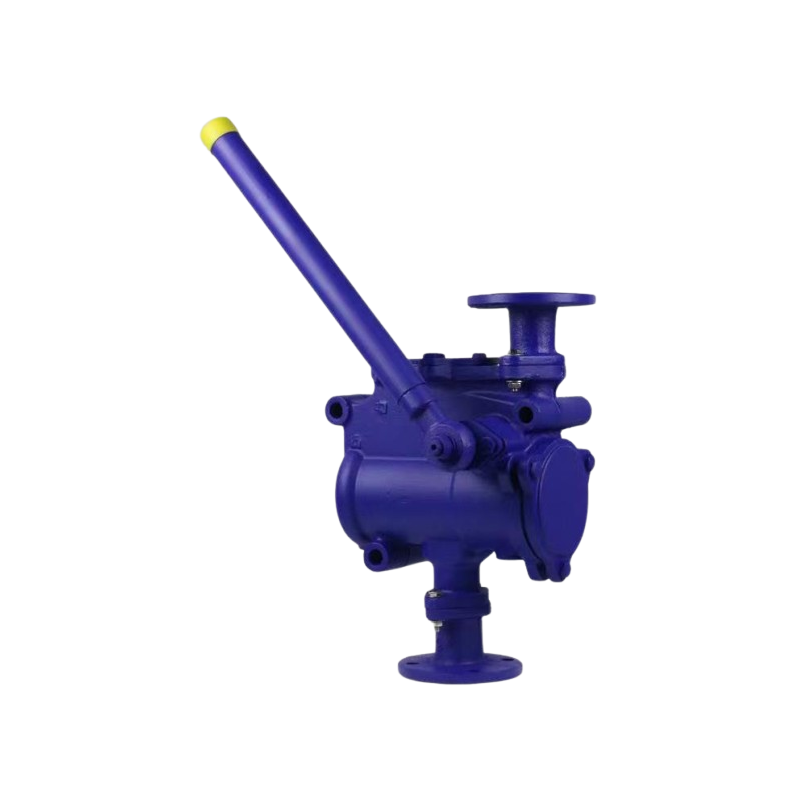
Pumping and conveying liquids: Hand pumps are suitable for pumping clean water, gasoline, kerosene, and non-corrosive liquids such as iron and copper. It can lift and convey these liquids by manually cranking the pump shaft to make the pump work.
Basic information of the product
In the event of a power or water supply outage, a hand pump can serve as an emergency water source, providing essential water for households, agriculture or disaster areas.
Usage Environment
In the event of a power outage or water supply failure, the hand pump is suitable for pumping clean water, gasoline, kerosene, and non-corrosive liquids such as iron and copper. It is not suitable for liquids containing fibers or other solid particles.
Product Advantages
Economical Hand Pumps: Cost - Effective Options for Small - Scale Operations
Good portability, simple operation, strong flexibility, high reliability and compact structure
Product Features
Use in case of power or water supply outage
Technical Parameters
| Pump Type | Hand Pump |
| Material | Cast Iron Aluminum Alloy |
| Drive type | Manual |
| Maximum flow | 3m3/h |
| Maximum lift | 30m |
| Installation Type | Horizontal |
| Maximum caliber | DN100 |
| Protection level | IP55 |
| Insulation class | F-Class |
Product Usage
Industrial field: Hand pumps have important applications in the industrial field, mainly used in various hydraulic systems, such as hydraulic systems of machine tools, injection molding machines, die-casting machines and other equipment. Through the drive of the hand pump, the hydraulic control and adjustment of the equipment can be realized to ensure the normal operation of the equipment1.
Agricultural field: In agriculture, hand pumps can be used for irrigation, fertilization and other operations. Through the drive of the hand pump, the liquid can be transported and controlled to improve agricultural production efficiency1.
Military field: Hand pumps are also widely used in the military field, mainly used in the hydraulic systems of various equipment. Through the drive of the hand pump, the hydraulic control and adjustment of the equipment can be realized to improve the combat effectiveness and reliability of the equipment1.
Daily life and emergency use: The hand pump has a simple structure, easy operation, does not require power or other power, and is suitable for various environments. It can be used in industrial and mining, enterprises, schools, vehicles, ships and other units for pumping oil, conveying liquids, etc.
Specific medium transportation: Hand pumps are suitable for conveying various oils, such as heavy oil, diesel, lubricating oil, etc., and can also convey liquids with low internal points such as gasoline and benzene. In addition, the hand pump has good self-priming properties and does not need to be filled with liquid before each pump opening.
Product Operation Guide
1. Before use, remove the drain screws on the two side covers and the upper cover, inject an appropriate amount of lubricating oil, and shake the handle until the handle moves freely.
2. The handle should be shaken back and forth at the maximum angle during operation. A filter should be installed before the pump inlet to prevent dirt from entering the pump, affecting the pump's working efficiency and service life or even damaging parts.
3. When installing the pump, check whether the valve in the upper cover of the pump is in the correct position, and shake the pump several times to see if there is any abnormality. If it is found to be abnormal, it can be replaced by our factory.
4. The oil seal cycle of this series of pumps is six months. If it is shelved for a long time or stopped for a long time, it should be cleaned and re-oiled.
Frequently asked questions
Blockage
To clear the blockage, first check whether there is any blockage inside the hand pump. If necessary, you can use professional cleaning agents or clean water to flush it to ensure that the pump is unobstructed.
Wear and tear
Update worn parts Severely worn parts should be replaced in time. You can contact professional maintenance personnel for inspection and replacement to ensure the normal operation of the hand pump.
Insufficient lubrication
Add lubricant and regularly use a hand pump to add an appropriate amount of lubricant to reduce friction and improve shaking efficiency. But be careful to choose the right lubricant and follow the instructions.
Maintenance recommendations
Maintenance suggestions: 1. Regular inspection: Regularly inspect all parts of the hand pump to ensure that they are in good condition. 2. Cleaning and maintenance: Regularly clean the impurities and dirt inside the water-oil pump to prevent blockage. 3. Lubrication and maintenance: Regularly add lubricant to the hand pump to reduce friction and extend its service life.