close
Choose Your Site
Global
Social Media


 |


| Quantity: | |
|---|---|

| Introduce the basic functions of the product |
1. Deep Well Water Extraction: Capable of diving tens to hundreds of meters underground to extract deep groundwater, suitable for deep well water extraction scenarios. 2. High-Lift Water Conveying: Multi-stage impeller series design achieves high-lift delivery of 10~300m, meeting the needs of long-distance and high-altitude water supply. 3. Sand-Resistant and Wear-Resistant Pumping: Cast iron flow parts are resistant to sand abrasion and slight corrosion, capable of pumping well water and river water with moderate sand content. 4. Stable and Continuous Water Supply: Equipped with overload, leakage, and water shortage protection, supporting long-term uninterrupted operation, suitable for large-volume water demand scenarios such as agricultural irrigation and municipal water supply. |
| Usage Environment |
1. Medium Requirements: Suitable for well water, river water, and groundwater with a sand content ≤1.5%, and can tolerate slightly corrosive water. Avoid pumping strong acids, strong alkalis, and wastewater containing large amounts of impurities. 2. Water Temperature and Depth: Medium temperature 0~40℃; submersion depth ≥1m, and a distance from the well bottom ≥5m to avoid inhaling sediment. 3. Well Type Compatibility: Compatible with standard deep wells, steel pipe wells, or concrete wells with an inner diameter ≥100mm. The well walls must be vertical, and the well bottom must be flat and free from collapse. 4. Power Supply and Altitude Compatibility: 380V/50Hz three-phase AC power (customized models support other voltages); altitude ≤1000m, derating is required for higher altitudes. 5. Environmental Tolerance: Can operate long-term in outdoor open-air, farmland, mining areas, etc. Rain and dust protection measures must be implemented for the control cabinet. |
| Product Advantages |
1. Durable Cast Iron Material: The flow-through components are made of wear-resistant cast iron, resistant to sand abrasion and slight corrosion, suitable for well water containing sand. 2. Multi-stage High Head: The impeller series design allows for a head of up to 300m, meeting the needs of long-distance, high-altitude water delivery. 3. Cost-effective Underwater Operation: Works submerged in deep wells, eliminating the need for a pump house, saving installation space and infrastructure costs. 4. Safe, Stable, and Long-lasting: Equipped with overload, leakage, and water shortage protection, it can provide continuous water supply for extended periods with a low failure rate. 5. Wide Applicability: Suitable for various water lifting needs, including agricultural irrigation, municipal water supply, and industrial drainage. |
| Technical parameters |
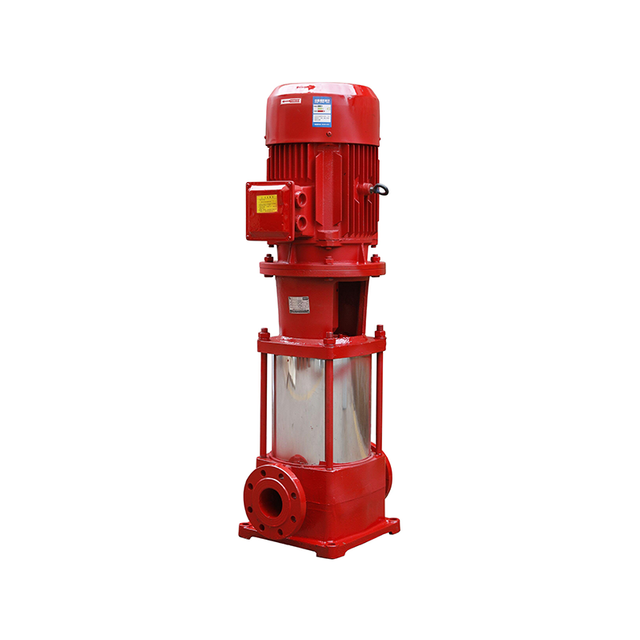
| type | Cast iron deep well pump |
| Material | cast iron |
| Driver type | electric |
| Installation type | Vertical |
| Maximum flow | 1200 cubic meters |
| Maximum head | 300 meters |
| Maximum power | 220KW |
| Protection level | IP55 |
| Insulation class | F |
| Standard voltage | 220V 380V 400V 480V 50Hz |
| Product Uses |
1. Agricultural Irrigation: Extracts deep groundwater to provide irrigation water for field crops, orchards, and greenhouses, suitable for high-lift, long-distance water delivery. 2. Municipal Water Supply: Serves as a deep well water supply system for towns and villages, supplementing waterworks or directly providing domestic water to remote areas. 3. Industrial and Mining Drainage/Water Supply: Drainage from mine tunnels and extraction of water for factory production, suitable for water quality conditions with moderate sediment content. 4. Engineering Dewatering: Deep well dewatering in scenarios such as building foundation pits and subway construction, rapidly lowering the groundwater level and ensuring construction safety. 5. Livestock Farming/Aquaculture: Extracts clean groundwater for farms and fishponds to meet the needs of livestock drinking water and aquaculture water replacement. |
| Product Operation Guide |
1. Installation Preparation: Inspect the pump body, cable, and delivery pipe for damage, ensuring that the cast iron flow parts are free of sand holes and cracks; verify the well diameter and water depth, ensuring the pump is submerged ≥1m underwater and ≥5m from the bottom of the well. Connect the delivery pipe, pump body, and cable in sequence, tightening the flange bolts to prevent water and air leaks; install the control cabinet and ground it, testing the overload and leakage protection functions. 2. Start-up: Slowly lower the pump body to the designated depth, ensuring the cable hangs naturally without pulling; close the power switch and run it under no-load for 1-2 minutes, observing whether the current and voltage are stable. Gradually open the outlet valve and adjust to the rated flow; monitor the pressure gauge reading and motor temperature during operation. If abnormal noise or a sudden pressure drop occurs, immediately stop the machine and investigate. 3. Shutdown and Maintenance: First, close the outlet valve, then disconnect the power supply to avoid water hammer impacting the pump body; for short-term shutdowns, there is no need to lift the pump; for long-term shutdowns, the pump body must be removed from the well, and the impeller and filter screen cleaned of sediment. Regularly check the cable insulation and water pipe sealing, add lubricating oil to the connecting parts, and perform rust prevention treatment on the cast iron pump body. |
| Frequently Asked Questions |
1. Failure to start or tripping upon starting is often due to a missing power phase, damaged or leaking cables, false triggering of the control cabinet's protection device, water ingress into the motor, or stuck bearings. 2. Insufficient flow and head are commonly caused by impeller blockage by silt, insufficient pump submersion depth, leaking water supply pipe joints, or actual operating conditions exceeding the pump's rated parameters. 3. Abnormal noise and excessive vibration during operation are generally due to misalignment between the pump and motor shafts, impeller wear imbalance, pump body rubbing against the well wall, or loose water supply pipe causing resonance. 4. Motor overheating and burnout are caused by prolonged overload operation, running dry without water, poor heat dissipation, unstable voltage, or aging insulation. 5. High sand content in the pumped water: The pump body is too close to the well bottom, drawing in silt; or the cast iron impeller and guide vanes are severely worn, reducing filtration efficiency. |