close
Choose Your Site
Global
Social Media


 |


| Quantity: | |
|---|---|

| Introduce the basic functions of the product |
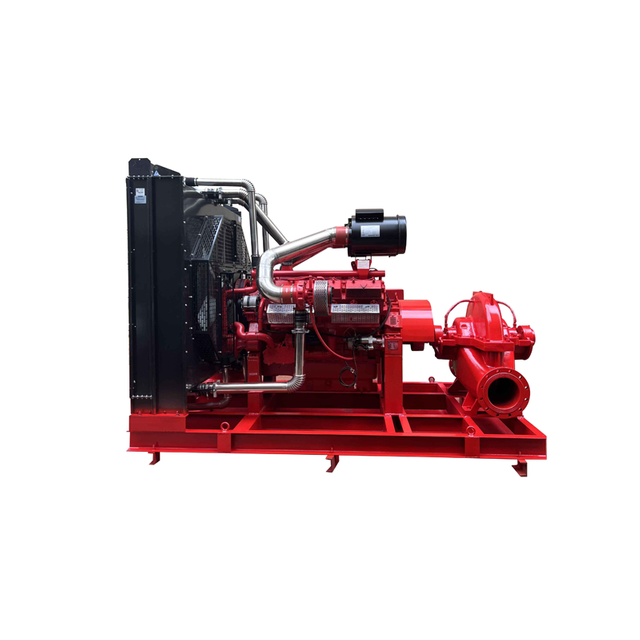
1. Self-priming without water intake With a built-in self-priming device, there is no need for manual water filling. The self-priming height can reach 3-8m, and the self-priming time is 30-120 seconds. It can quickly absorb and drain water as soon as it is turned on, making it suitable for outdoor scenarios without water pretreatment. 2. Diesel-powered drive Powered by a diesel engine, it eliminates the need for mains electricity, boasts long-lasting range and strong power, and can operate stably in areas without power, such as farmland and remote construction sites. 3. Multi-media delivery The flow-through components can be made of cast iron or stainless steel, and can transport clean water as well as pump out sewage containing a small amount of mud and impurities, to meet different needs such as irrigation and sewage discharge. 4. Portable mobile operation The small model features a hand-held design, while the medium and large models come with wheels or a trailer structure, allowing for quick relocation to different work locations and adaptability to flexible working conditions such as emergency drainage and mobile irrigation. 5. Stable and efficient pumping With high flow rate and high head output, the flow rate ranges from 5-500 m³/h, and the head can reach 10-150 m, which can meet the large-scale pumping needs of agricultural irrigation, construction site dewatering and drainage, etc. |
| Usage Environment |
1. Media Environment● Suitable Media: Clean water, sewage containing a small amount of silt/impurities, rainwater, river water, viscosity ≤10mm²/s ●Material Compatibility: Cast iron version for neutral water quality; stainless steel version (304/316) can pump mildly corrosive liquids (pH 5-9) ●Contraindications: Strictly prohibited for pumping flammable and explosive liquids such as gasoline and diesel, as well as strong acids, strong alkalis, and high-viscosity media. 2. Working environment ● Temperature: -10℃~40℃ (standard models); antifreeze oil needs to be changed in low-temperature environments, and a cooling device needs to be installed in high-temperature environments. ● Altitude: ≤2000m; engine power will decrease in high-altitude areas, requiring the selection of a high-altitude-specific model. ● Location: Must be placed on a flat, firm surface, avoiding low-lying areas with standing water, and flammable or explosive areas; outdoor operations require rain and sun protection to prevent water from entering the engine. 3. Operating Conditions ● Self-priming height ≤ rated value (typically 3-8m), excessive height will cause self-priming failure. ● Continuous operation time: small machines ≤ 8h/cycle, medium and large machines ≤ 24h/cycle, avoid engine overload. ● Applicable scenarios: farmland irrigation, emergency drainage, construction site dewatering, field water supply, and other areas without mains power coverage. |
| Product Advantages |
1. Works without electricity, highly adaptable to outdoor environments. Powered by a diesel engine, it eliminates the need for mains power and can operate stably in areas without power, such as farmland, construction sites, and flood-stricken areas. It has a long range and a single refueling can meet the needs of pumping water for extended periods. 2. Self-priming, no water required, making operation more convenient. With a built-in self-priming device, the self-priming height is 3-8m and the self-priming time is only 30-120 seconds. No manual water filling is required; water can be pumped as soon as the machine is turned on, greatly saving preparation time. 3. Multi-media compatibility, wide range of applications The flow-through components can be made of cast iron or 304 stainless steel, and can pump clean water as well as transport sewage containing a small amount of mud and impurities, making it suitable for various working conditions such as irrigation, drainage, and sewage discharge. 4. Portable and mobile, flexible for relocation The small model features a hand-held design, while the medium and large models come with wheels or a trailer structure, allowing for easy relocation by one person. These models are suitable for emergency drainage, mobile irrigation, and other operations that require frequent site changes. 5. Powerful pumping motor with high pumping efficiencyWith high flow rate (5-500m³/h) and high head (10-150m) output, it can quickly complete large-scale water pumping tasks such as farmland irrigation and construction site dewatering, and its operating efficiency far exceeds that of ordinary electric pumps. 6. Wear-resistant and durable, with a long service life. The fuselage is made of high-strength materials, and the engine and pump body are resistant to bumps and impacts, adapting to complex and harsh outdoor environments. It is easy to maintain and has a low failure rate. |
| Technical parameters |
| type | Self-priming diesel water pump |
| Material | Cast iron (standard configuration), 304 stainless steel, 316 stainless steel |
| Driver type | Diesel engine driven |
| Installation type | Hand-held, mobile (with wheels), trailer-mounted, stationary |
| Maximum caliber | DN300 (12 inches) |
| Maximum flow | 500 m³/h |
| Maximum head | 150 m |
| Maximum power | 300kW |
| Protection level | IP54 |
| Insulation class | F-class |
| Standard voltage | 12V/24V (DC, with matching battery) |
| Product Uses |
1. Large-scale farmland irrigation Suitable for long-distance irrigation of field crops, orchards, and tea gardens, it can directly draw water from rivers, wells, and reservoirs. High-flow models (100-500 m³/h) can quickly cover large areas, eliminating the limitations of the power grid, and are especially suitable for agricultural operations in remote mountainous and hilly areas. 2. Municipal emergency drainage and disaster relief Addressing emergencies such as urban flooding, basement water accumulation, underground garage/subway seepage, and flood disasters. Trailer-mounted high-lift models (50-150m lift) are highly mobile and can be quickly deployed to the disaster relief site. No pre-priming water is required; simply start the pump to drain water and reduce property damage. 3. Dewatering at construction sites This machine solves the problem of water accumulation during foundation pit and pile foundation construction, and can pump out turbid water containing small amounts of mud, sand, and gravel. The cast iron version is wear-resistant and clog-resistant, while the hand-held/mobile models allow for easy and flexible movement within the construction site, ensuring construction progress and avoiding the risk of foundation pit collapse. 4. Wastewater discharge from farms/slaughterhouses Used for the collection and transportation of manure and wastewater, the stainless steel model (304/316) can withstand mildly corrosive liquids, preventing pump body corrosion. The medium flow model is suitable for daily sewage discharge in farms and can also be used for the transportation of wastewater in the pretreatment stage of slaughterhouses. 5. Drainage of mine tunnels For seepage and water inrush during underground mining and tunnel construction, high-lift diesel water pumps can discharge water to the surface, adapting to the harsh environment of damp and dusty mines. They do not require underground power supply systems and have a high safety factor. 6. Outdoor living and engineering water supply It serves the domestic water supply needs of remote rural areas, outdoor camping sites, and oil exploration camps, and can also be used for construction water transportation for highway maintenance and bridge construction. The small, hand-held models (5-15kW) are lightweight, portable, and have a long operating time, meeting the needs of decentralized water use. 7. Water use in gardens and livestock farms It is used for large-area watering of urban green belts, irrigation of golf course lawns, and delivery of drinking water to livestock farms. The mobile model can move with the work area, eliminating the need to lay long-distance water pipes and improving maintenance efficiency. |
| Product Operation Guide |
I. Preparations before powering on 1. Check the engine oil and diesel fuel levels, and replenish them promptly if necessary; check the coolant (for water-cooled models) to ensure the level is normal. 2. Connect the inlet and outlet water pipes: Install a filter screen on the inlet water pipe, place water in it, and seal the connection to prevent air leakage; secure the outlet water pipe firmly to prevent it from falling off. 3. For small hand-operated starter models: close the choke (for cold starts); for electric starter models: ensure the battery has sufficient power and turn the switch to the "ON" position. 4. Ensure there is water in the pump chamber (water needs to be added for first-time use), close the drain valve, and open the outlet valve. II. Startup and Operation 1. Manual start: Hold the pull rope handle, slowly pull to the resistance point, then quickly pull to start; after starting, open the choke and let it idle for 2-3 minutes. 2. Electric start: Press the start button; a single start should not exceed 5 seconds, and the interval between consecutive starts should be ≥30 seconds; after starting, observe the pressure gauge, and gradually increase the throttle once the pressure stabilizes. 3. Maintain a sufficient water supply during operation to prevent air from being drawn into the inlet pipe; regularly check the filter to prevent blockage by impurities. 4. Prolonged dry running is strictly prohibited to avoid damage to the pump body due to dry friction. III. Shutdown Operation 1. First, reduce the throttle and let the engine idle for 3-5 minutes to cool down before turning off the switch. 2. Close the outlet valve and disconnect the inlet and outlet water pipes; open the pump body drain valve to drain the water remaining in the pump chamber (to prevent freezing in winter or rusting during long-term storage). 3. Clean the filter screen of impurities, wipe the machine body, and place it in a dry, well-ventilated area. IV. Safety Precautions 1. Maintain ventilation during operation to avoid diesel engine exhaust poisoning; keep away from open flames to prevent fuel leaks from causing fires. 2. Do not touch high-temperature components (such as exhaust pipes) while the machine is running to prevent burns. 3. The machine must be stopped and the starting power disconnected during maintenance to prevent accidental starting. |
| Frequently Asked Questions |
| Frequently Asked Questions | Core reason | Solutions |
| Unable to self-absorb/slow water absorption | 1. Air leak in the water inlet pipe | 1. Inspect the pipe connections and reseal and tighten them. |
| 3. Clogged inlet filter | 3. Disassemble and clean the filter screen to remove impurities. | |
| 4. Insufficient water in the pump chamber | 4. Replenish water in the pump chamber to ensure a tight seal. | |
| Insufficient flow/head | 1. Engine throttle not fully open | 1. Increase the throttle to the rated speed. |
| 2. Impeller wear or blockage | 2. Disassemble the pump body and clean or replace the impeller. | |
| 4. The medium contains too many impurities. | 4. Add a finer filter to filter impurities. | |
| Difficulty starting the engine | 1. Insufficient diesel fuel or deteriorated fuel. | 1. Refill with qualified diesel fuel and purge air from the fuel system. |
| 2. Engine oil level is too low | 2. Add engine oil that meets specifications. | |
| 3. Battery depletion in electric starter models | 3. Charge or replace the battery. | |
| 4. The choke damper of the chiller was not closed. | 4. Close the stop valve when starting the machine cold, and open it after starting. | |
| abnormal vibration/noise of pump body | 1. The foundation is not securely fixed. | 1. Tighten the anchor bolts and level the pump body. |
| 2. The bearing is severely worn. | 2. Replace the damaged bearing. | |
| 3. Impeller imbalance or foreign objects present. | 3. Clean foreign objects from the impeller and adjust its balance. | |
| 4. Damaged engine shock absorbers | 4. Inspect or replace engine shock absorbers. | |
| Engine automatically shuts off | 1. Fuel depleted or fuel line blocked | 1. Add diesel fuel and clean the fuel filter. |
| 2. Insufficient coolant (for water-cooled models) | 2. Add coolant and check the cooling system. | |
| 3. Overload protection device triggered | 3. Reduce the load, troubleshoot the cause of the overload, and then restart. | |
| Pump body leakage | 1. Aging of seals/gaskets | 1. Replace worn-out seals and gaskets. |
| 2. Weld cracking | 2. Repair the cracked weld by welding. | |
| 3. Loose flange bolts | 3. Tighten the flange bolts evenly. |