close
Choose Your Site
Global
Social Media


 |


| Quantity: | |
|---|---|

| Basic functions of the product |
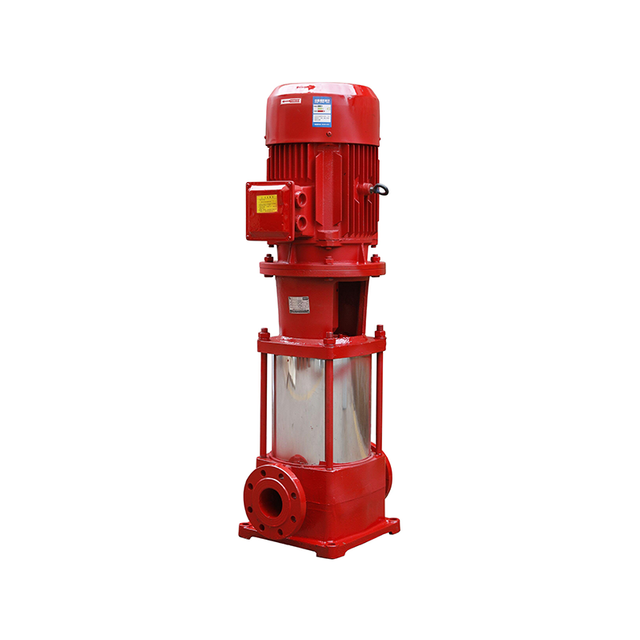
Ensure a stable supply of fire water; improve fire extinguishing efficiency; Protect electrical equipment and provide power stability; Extend equipment life and reduce maintenance costs; energy saving and environmental protection |
| Basic information of the product |
The fire-fighting pressure-stabilizing unit separates the gas and water through a diaphragm, and can be used all year round after being inflated once. When the system pressure drops, the gas in the air chamber expands, the diaphragm contracts, and water is forced out of the water chamber; when the pressure rises, the gas in the air chamber is compressed and the diaphragm stretches, thereby maintaining the system pressure stable. Specifically, when the system needs to be replenished with water, the water replenishment pump is started, water enters the water chamber, causing the water pressure to increase, and the gas in the air chamber is compressed; when the water pressure drops, the gas in the air chamber expands, the diaphragm contracts, and water is forced out of the water chamber. The continuous water supply is controlled by the electric contact pressure gauge and the automatic control box. |
| Usage Environment |
1. Temperature requirements: The fire-fighting voltage stabilizer unit should be installed in a temperature-stable environment, the temperature range should be between 0℃~40℃, and the relative humidity should be between 20%~90% 2. Humidity requirements: The ambient humidity should be kept within an appropriate range to prevent high humidity from causing moisture on the circuit board, degradation of insulation performance, and even short circuit failure. 3. Ventilation requirements: The fire-fighting voltage stabilizer unit should be installed in a well-ventilated place to ensure air circulation and avoid direct sunlight and the influence of corrosive gases. 4. Shockproof requirements: The unit should be installed in a place that avoids vibration and impact to ensure stable operation in a vibrating environment. 5. Lightning protection requirements: Pay attention to lightning protection measures during installation to prevent lightning damage to the equipment. |
| Technical Parameters |
| Pump Type | Fire stabilizing unit |
| Material | Carbon Steel |
| Drive type | electric |
| Maximum flow | 18m3/h |
| Maximum lift | 193m |
| Installation Type | Dry |
| Maximum caliber | 50 |
| Maximum Power | 11KW |
| Protection level | IP54 |
| Insulation class | F-Class |
| Standard voltage | 380V |
| Product Usage |
| 1. High-rise buildings:High-rise buildings require a high pressure for fire water supply systems, and traditional water supply methods are difficult to meet the demand. Fire pressure stabilizers can effectively solve the problem of insufficient pressure in high-rise building fire water supply systems, ensuring that when a fire occurs, the fire system can supply water in a timely and effective manner, thereby improving fire extinguishing efficiency. |
| 2. Large commercial complexes: such as shopping malls, supermarkets and other crowded places, which are usually large in area, with many floors and complex fire protection requirements. The setting of the pressure stabilizing unit can ensure that sufficient fire water pressure can be obtained at any location, ensuring the comprehensive coverage and effective operation of the fire protection system. |
| 3. Industrial Plant:Industrial plants may store flammable and explosive materials, which places extremely high demands on fire protection systems. The setting of the voltage stabilizer can ensure that fire protection facilities can be used normally and fire protection water sources can be supplied stably when a fire occurs, thereby effectively controlling the fire and reducing losses. |
| 4. Special places: such as hospitals, schools, subway stations, tunnels, airports, railway stations, etc. These places have extremely high requirements for the stability and reliability of the fire protection system. The installation of voltage stabilizers can significantly improve the fire safety level of these places, ensuring that the fire protection system can respond quickly when a fire occurs, providing strong support for personnel evacuation and fire fighting. |
| 5. Industrial parks and petrochemical enterprises:Industrial parks have many production equipment and fire hazards; petrochemical enterprises have many flammable and explosive substances and have extremely strict requirements on fire protection systems. The installation of voltage stabilizers can improve the fire safety level of these places, ensuring that the fire protection system can provide stable and reliable water supply when a fire occurs, providing strong support for fire fighting. |
| Product Operation Guide |
I. Preparation 1.1 Check the appearance and connection parts of the fire-fighting pressure-stabilizing pump for looseness or damage. 1.2 Turn on the main power supply of the fire-fighting system and adjust the switch of the pressure-stabilizing pump to the automatic state. 1.3 Close the gate of the pump station and release water into the main pipeline to ensure that there is no gas in the pipeline. 1.4 Open the water valve of the pump room and the inlet and outlet valves of the pressure-stabilizing pump to ensure smooth water flow. At the same time, adjust the outlet pressure gauge of the pressure-stabilizing pump to the alarm pressure. II. Start-up operation 2.1 Before starting the pressure-stabilizing pump, make sure that all water pumps in the system have stopped. 2.2 Open the door of the power box of the pressure-stabilizing pump and check whether the electrical device is normal. 2.3 Manually turn the wheel in the clockwise direction until the pressure value set by the pressure-stabilizing pump reaches the pressure value required by the system. 2.4 Manually turn the wheel in the counterclockwise direction until the pressure-stabilizing pump stops. 2.5 Start the pressure-stabilizing pump and check whether the mechanical connections are normal and ensure that the pressure gauge has displayed the set pressure value. 3. Operation status monitoring 3.1 Monitor the operation status of the water pump to ensure that the pump speed, pressure, flow and other parameters are within the normal range. 3.2 Monitor the lubricating oil temperature to ensure the normal operation of the lubrication system. 3.3 Regularly check the operation status of various pipelines, valves, instruments and other equipment, troubleshoot and perform maintenance in a timely manner. 3.4 Regularly replace the lubricating oil and the seals in the pump body to extend the service life of the fire-fighting pressure-stabilizing pump. |
| Frequently asked questions |
| 1. Electrical failure: Check the power line to ensure that the power supply is stable and reliable; Check whether the wiring is correct to avoid short circuit |
| 2 Mechanical failure: Damaged or worn bearings can cause excessive noise or unstable operation; damaged or worn gears can cause unstable operation or failure to start normally. |
| 3. Water pump failure: blockage or wear inside the pump body will cause it to fail to operate normally, and damage or wear of the impeller will cause the flow rate to decrease or fail to operate normally. |