
close
Choose Your Site
Global
Social Media


Views: 0 Author: Site Editor Publish Time: 2026-06-02 Origin: Site


How do you choose the right fire pump size for your building? Selecting an EDJ type End Suction Fire Pump Unit is crucial. These units ensure reliable fire protection in many applications. In this post, you’ll learn about EDJ pumps, why size matters, and their common uses.
End suction pumps are the heart of EDJ type fire pump units. These pumps draw water in through the suction inlet located at one end and discharge it at a right angle through the outlet. Their simple and compact design makes them highly reliable and easy to maintain. In fire protection systems, they provide the necessary water flow and pressure to sprinkler systems, hydrants, and other firefighting equipment.
The horizontal configuration of these pumps allows for efficient water movement and easy integration into skid-mounted units. Their robust construction ensures they can handle the sudden demand surges during emergencies without failure.
EDJ units combine electric motors and diesel engines to drive the end suction pumps, ensuring continuous and reliable operation.
Electric Motor Driver: This is the primary driver used when electrical power is available. Electric motors offer clean, quiet, and efficient operation, ideal for most commercial and industrial buildings. They are sized according to the pump’s horsepower requirements and the system’s flow and pressure demands.
Diesel Engine Driver: The diesel engine acts as a standby driver, kicking in during power outages or electrical failures. It ensures the fire pump remains operational even when the main power source is down. Diesel engines are rugged and designed to start quickly under emergency conditions. They are housed within the same skid assembly, ready to engage automatically.
This dual-driver setup provides redundancy and guarantees that fire protection systems remain functional under all circumstances.
A jockey pump is a smaller, auxiliary pump included in EDJ units. Its primary role is to maintain system pressure during normal conditions and compensate for minor leaks or pressure drops in the fire protection piping.
By running at low capacity, the jockey pump prevents the main fire pump from cycling on and off unnecessarily, which reduces wear and energy consumption. It ensures the fire system is always pressurized and ready to deliver water instantly when needed.
Typically, jockey pumps are electric motor-driven and sized to handle small flow rates (e.g., 10-50 GPM) at lower pressures. They operate automatically through pressure switches that monitor system pressure.
EDJ fire pump units come as fully assembled skid-mounted packages. This design integrates the pump, drivers, jockey pump, valves, piping, and control systems onto a single compact frame.
Key components included in the skid assembly:
Gate Valves and Check Valves: Control water flow and prevent backflow, ensuring system integrity.
Flexible Joints: Reduce vibration and accommodate slight misalignments between components.
Pressure Switches and Gauges: Monitor system pressure and trigger pump operation.
Control Panel: Automates pump starting/stopping, monitors system status, and provides alarms.
Pre-piping and wiring on the skid simplify installation and reduce onsite work. The compact and modular design allows easy transport, quick setup, and reliable operation.
Note: Selecting an EDJ unit with properly integrated components ensures smooth operation and quick response during fire emergencies, minimizing installation time and maintenance complexity.
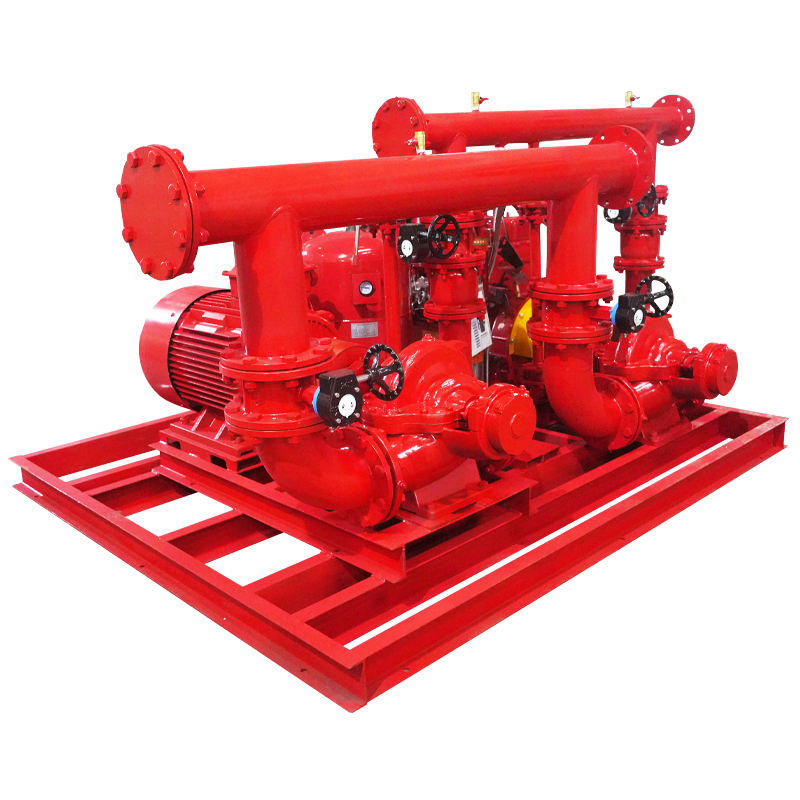
Choosing the right size EDJ fire pump starts with knowing how much water your system needs. The flow rate, usually in gallons per minute (GPM), depends on the building type and fire protection system installed. For example, a small office might need a lower flow rate than a large warehouse or high-rise building.
To calculate flow rate:
Identify the sprinkler system type: Ordinary hazard, extra hazard, or special hazard systems each have different flow demands.
Count the number of sprinkler heads and their flow requirements.
Consider the building’s total area and the hazard classification per NFPA guidelines.
Add any additional water needs for fire hose cabinets, hydrants, or foam systems connected to the pump.
This ensures the pump can supply enough water to control or extinguish a fire effectively.
Pressure is as important as flow rate. The pump must push water through pipes, fittings, and sprinklers with enough force to reach every part of the building, especially upper floors.
Key pressure factors include:
Elevation Head: Water must be pumped higher in tall buildings, requiring more pressure.
Friction Loss: Water loses pressure as it flows through pipes and valves. Longer pipes and smaller diameters increase friction.
Sprinkler Head Pressure: Each sprinkler head needs a minimum pressure to operate properly.
Calculate total pressure needed by adding elevation head and friction losses to the minimum sprinkler head pressure. This total pressure guides pump selection to maintain system effectiveness.
Different occupancies have unique fire risks. The hazard classification influences both flow and pressure requirements.
Light hazard: Offices, schools, churches; lower flow and pressure.
Ordinary hazard: Factories, warehouses; moderate requirements.
Extra hazard: Chemical plants, power plants; highest demands.
Classifying occupancy helps determine minimum water supply and pressure per NFPA 13 and NFPA 20 standards. It also affects pump size choice to cover the worst-case fire scenario.
NFPA 20 sets the standard for fire pump installation and sizing. It provides formulas, tables, and guidelines ensuring pumps meet safety and reliability requirements.
Key points from NFPA 20 include:
Minimum flow and pressure for different hazard classes.
Net Positive Suction Head (NPSH) requirements to avoid pump cavitation.
Testing and maintenance standards.
Requirements for emergency power and backup systems.
Local codes may add specific rules based on regional conditions or building types. Always consult both NFPA 20 and local regulations before finalizing pump size.
Tip: Always work with a fire protection engineer to accurately calculate flow and pressure needs and ensure compliance with NFPA 20 and local codes for optimal EDJ fire pump sizing.
EDJ type end suction fire pump units cover a broad range of flow capacities to meet various fire protection needs. Typical flow rates range from as low as 50 gallons per minute (GPM) up to 1000 GPM. This wide selection allows the units to serve small commercial buildings as well as large industrial facilities.
Common flow capacities include:
50 GPM, ideal for small systems or low hazard occupancies
120 and 150 GPM, suited for moderate-sized buildings
250, 300, and 350 GPM, frequently used in larger commercial or industrial applications
500, 750, and 1000 GPM, designed for high-demand fire protection systems, such as warehouses or high-rise buildings
Having multiple flow options ensures the fire pump can be sized precisely to system requirements, avoiding over- or under-sizing.
Standard EDJ fire pump skid models come pre-assembled with specific dimensions and power ratings to simplify selection and installation. Here’s an overview of typical specifications:
Flow (GPM) | Skid Width (mm) | Skid Height (mm) | Skid Length (mm) | Diesel Engine (HP) | Electric Motor (HP) | Jockey Pump (HP / GPM) | Header Pipe Size |
|---|---|---|---|---|---|---|---|
50 | 650 | 1250 | 1230 | 8 | 5.5 | 3 / 10 | 2" |
120 / 150 | 1220 | 1300 | 1220 | 15 | 15 | 3 / 10 | 2.5" |
250 / 300 | 1220 | 1420 | 1220 | 25 | 30 | 3 / 15 | 4" |
350 | 1550 | 1630 | 1600 | 40 | 40 | 3 / 20 | 4" |
500 | 1600 | 1420 | 1800 | 60 | 50 | 5.5 / 25 | 6" |
750 | 1700 | 1300 | 1800 | 85 | 75 | 5.5 / 35 | 6" |
1000 | 1700 | 1250 | 2000 | 100 | 100 | 5.5 / 50 | 6" |
These models come skid-mounted for easy transport and installation. The horsepower ratings for diesel engines and electric motors match the pump’s hydraulic requirements, ensuring reliable performance under emergency conditions.
While standard models cover most applications, some projects require custom designs. EDJ units can be tailored for special hazard environments, such as chemical plants, power stations, or areas with unique fire suppression needs. Customizations may include:
Modified pump curves to handle unusual flow or pressure demands
Enhanced materials to resist corrosive or high-temperature environments
Integration with foam systems or deluge valves
Variable speed drives for energy efficiency and precise control
Additional instrumentation or alarms for critical monitoring
Manufacturers work closely with engineers to design these configurations, ensuring compliance with NFPA 20 and local codes.
EDJ fire pump units offer several optional features to boost system reliability and functionality:
Pressure Tanks: Used as an alternative or supplement to jockey pumps, pressure tanks maintain system pressure and reduce pump cycling.
Double Electric Pumps: Two electric motor-driven pumps (main and standby) provide redundancy in power-supplied locations.
Double Diesel Pumps: In areas without reliable electricity, two diesel engine-driven pumps ensure backup capability.
Additional Accessories: Pressure relief valves, flow meters, and remote monitoring panels can be added for enhanced control and safety.
These options allow customization to meet specific operational or code requirements, improving system resilience during emergencies.
Tip: When selecting an EDJ fire pump unit, match the flow capacity and power ratings closely to your system’s calculated needs, and consider optional features like pressure tanks or dual pumps to improve reliability and reduce maintenance costs.
Net Positive Suction Head (NPSH) is critical for fire pump reliability. It represents the pressure available at the pump’s suction side to avoid cavitation. Cavitation occurs when water vapor bubbles form inside the pump, causing damage and loss of performance. Ensuring adequate NPSH means the pump can operate smoothly under all conditions.
To select the right EDJ pump, compare the NPSH available from the water source against the NPSH required by the pump manufacturer. The available NPSH depends on factors like water source elevation, suction pipe design, and atmospheric pressure. The required NPSH is specified by the pump and varies by model and operating point.
Failing to meet NPSH requirements shortens pump life and reduces flow capacity. Therefore, engineers must carefully calculate and verify NPSH during pump sizing.
Pipe characteristics significantly affect pump selection. Smaller pipe diameters increase friction loss, requiring the pump to generate higher pressure. Longer pipe runs add more friction loss, further increasing pressure needs.
Sprinkler heads also have minimum pressure requirements to ensure proper spray patterns and coverage. The pump must maintain sufficient pressure at the most hydraulically remote sprinkler head, accounting for elevation and friction losses throughout the piping system.
When sizing an EDJ unit, consider:
Pipe diameter and material
Total pipe length and number of fittings
Elevation differences from pump to sprinkler heads
Required pressure at sprinkler heads
Balancing these factors ensures the pump delivers enough pressure and flow without oversizing.
EDJ units combine three pump types, each with a distinct role:
Electric Motor Pump: Primary driver during normal power conditions. Offers efficient, quiet operation and quick response.
Diesel Engine Pump: Backup driver for power outages. Diesel engines start automatically and provide reliable power when electricity fails.
Jockey Pump: Smaller pump maintaining system pressure under normal conditions. Prevents main pumps from cycling unnecessarily by compensating for minor pressure drops.
Choosing the right combination depends on power availability, building occupancy, and local regulations. Diesel pumps are essential where power reliability is low, while electric pumps suit facilities with stable power. Jockey pumps extend system life by reducing main pump wear.
Fire protection demands high reliability. Redundancy ensures the system works even if one component fails.
Common redundancy features include:
Dual pumps (electric-electric or diesel-diesel) for backup
Automatic transfer switches to switch power sources smoothly
Alarm systems to notify operators of faults
Regular testing protocols to verify backup readiness
Backup systems protect against pump failure, power loss, or mechanical issues, ensuring firefighting water is always available.
Tip: Always verify NPSH availability early in the design to avoid costly pump damage and ensure reliable fire pump operation.
Compliance with NFPA 20 is essential when selecting and installing EDJ fire pump units. This standard sets minimum requirements for pump performance, installation, and testing to ensure safety and reliability during fire emergencies. It covers aspects such as:
Minimum flow and pressure capacities based on hazard classification
Net Positive Suction Head (NPSH) requirements to prevent pump cavitation
Emergency power supply provisions, including diesel engine standby pumps
Control panel specifications for automatic operation and alarms
Testing frequency and procedures to verify pump readiness
Local fire protection codes often adopt or supplement NFPA 20 guidelines. These may include additional requirements specific to building type, occupancy, or regional conditions. Ensuring compliance means the EDJ unit will meet legal, insurance, and safety standards, reducing liability and improving overall protection.
Energy consumption is a key factor in fire pump operation, especially for electric motor-driven units. Selecting the right size pump avoids oversizing, which leads to wasted energy and increased costs. Considerations for efficiency include:
Using high-efficiency electric motors that reduce power loss
Implementing variable speed drives (VSDs) for systems with fluctuating demand
Choosing jockey pumps sized to minimize cycling of main pumps
Incorporating pressure relief valves to prevent over-pressurization
Properly sized and maintained EDJ units consume less energy while maintaining readiness. This lowers operational costs and extends equipment life.
Routine testing and maintenance are critical to keep EDJ fire pump units operational when needed. NFPA 20 and local codes require:
Weekly or monthly pump churn tests to verify operation without flow
Annual full flow tests to confirm performance at rated capacity
Inspection of diesel engines, fuel supply, batteries, and control systems
Checking valves, gauges, and pressure switches for proper function
Scheduled maintenance prevents unexpected failures, detects wear early, and ensures pumps start automatically during emergencies.
Fire protection engineers bring expertise in hydraulic calculations, code compliance, and system design. Their involvement helps:
Accurately determine flow and pressure requirements based on building specifics
Select pump models matching calculated demands and site conditions
Integrate EDJ units with other fire protection equipment and controls
Ensure compliance with NFPA 20 and local regulations
Optimize system efficiency and reliability
Consulting professionals reduces risks of improper sizing, costly modifications, and non-compliance issues.
Tip: Engage a qualified fire protection engineer early to ensure your EDJ fire pump unit meets all compliance requirements and operates efficiently throughout its service life.
EDJ type end suction fire pump units are highly suitable for fire hose cabinet systems and automatic sprinkler systems. These pumps provide the reliable water flow and pressure needed to activate sprinklers instantly during a fire event. Their compact skid-mounted design allows easy integration into building fire protection infrastructure, whether in commercial offices, residential complexes, or industrial plants.
For fire hose cabinets, EDJ units ensure water delivery at pressures sufficient for effective hose stream reach. In automatic sprinkler systems, they maintain steady pressure to quickly suppress fires before they spread. The combination of electric and diesel drivers guarantees operation even if the main power fails, critical for emergency response.
Beyond hose cabinets and sprinklers, EDJ units serve well in deluge, hydrant, and foam fire protection systems.
Deluge Systems: These require rapid water discharge through open sprinklers or nozzles to flood an area. EDJ pumps provide the high flow rates and pressure needed to activate deluge valves and maintain system effectiveness.
Hydrant Systems: Hydrants demand consistent water pressure for firefighting crews. EDJ units supply this reliably, supporting fire hoses and equipment during emergencies.
Foam Systems: For fires involving flammable liquids, foam suppression is crucial. EDJ pumps can be configured to feed foam concentrate and water mixtures at required pressures, enhancing fire control.
Their versatility allows EDJ units to adapt to diverse fire protection setups, making them a preferred choice across industries.
EDJ fire pump units come as skid-mounted, pre-piped, and fully automatic assemblies. This offers several benefits:
Ease of Installation: Pre-piped and wired units reduce onsite labor and errors. The compact skid fits easily in mechanical rooms or dedicated fire pump spaces.
Reduced Commissioning Time: Factory assembly and testing ensure components work seamlessly together, shortening setup time.
Fully Automatic Operation: Integrated control panels monitor system pressure and start the appropriate pump automatically—electric motor during normal power and diesel engine during outages.
Maintenance Simplification: Centralized components on a skid allow easier inspection, servicing, and replacement.
Space Efficiency: The compact footprint suits buildings with limited mechanical room space.
These advantages translate into faster project completion, lower installation costs, and reliable operation.
One of the most critical benefits of EDJ units is their operational reliability during emergencies, especially power failures. The dual-driver setup—electric motor as primary and diesel engine as backup—ensures continuous pump operation. If the electric supply is interrupted, the diesel engine automatically starts, maintaining water flow without delay.
This redundancy is vital for fire safety, as water supply interruption could lead to uncontrolled fire spread and property damage. The jockey pump maintains system pressure during standby, preventing main pump cycling and ensuring readiness.
Moreover, skid-mounted control panels provide alarms and diagnostics, alerting building personnel to any faults or pump status changes. This proactive monitoring enhances system reliability and response times.
Tip: Choose EDJ fire pump units with fully integrated skid-mounted designs to ensure swift installation, automatic operation, and dependable performance during critical fire emergencies.
Choosing the right EDJ type end suction fire pump unit requires balancing flow rate, pressure needs, and compliance with NFPA 20 and local codes. Proper sizing ensures reliable water supply for various fire protection systems, preventing oversizing or undersizing issues. Integrating electric and diesel drivers with jockey pumps enhances system readiness and efficiency. For optimal fire safety performance, consult experts and select units designed for easy installation and dependable operation. Shanghai Diequan Water Pump (Group) Co., Ltd. offers high-quality EDJ fire pump units that deliver reliable, efficient fire protection solutions tailored to your needs.
A: EDJ type End Suction Fire Pump Units provide reliable water flow and pressure for fire protection systems like sprinklers, hose cabinets, hydrants, and foam systems, ensuring effective fire suppression.
A: Calculate your building’s flow rate and pressure needs based on occupancy, hazard classification, elevation, and pipe friction loss, then select an EDJ type End Suction Fire Pump Unit that meets those requirements per NFPA 20.
A: This dual-driver setup ensures continuous operation during power outages, with electric motors as primary drivers and diesel engines as automatic backups for emergency reliability.
A: They simplify installation, reduce onsite work, provide fully automatic operation, and ensure compact, reliable fire pump systems with integrated controls and accessories.
A: Costs vary by flow capacity, power rating, and customization; consulting suppliers with your system requirements will provide accurate pricing.
A: Regularly test pumps, check NPSH to avoid cavitation, inspect valves and controls, and maintain diesel engines to ensure reliable operation.


