
close
Choose Your Site
Global
Social Media


Views: 0 Author: Site Editor Publish Time: 2026-01-05 Origin: Site


When a fire strikes, every second counts. Understanding fire pumps is essential for effective fire protection. These vital systems ensure adequate water pressure to combat flames and save lives.
In this article, we’ll explore the four main types of fire pumps. You’ll learn their unique features and ideal applications, helping you make informed decisions for safety. This process ensures that when a fire is detected, the system can deliver water quickly and efficiently.
Fire pumps are vital for maintaining adequate water pressure during emergencies. Without them, a fire can spread rapidly, leading to devastating consequences. Here are a few reasons why fire pumps are crucial:
● Adequate Water Pressure: They ensure that enough water reaches fire suppression systems, which is essential for effective firefighting.
● Flow Rate: Fire pumps can deliver high volumes of water, which is critical in large commercial or industrial settings.
Fire pumps are used in various environments, including:
Setting | Application |
Commercial Buildings | Ensures sprinkler systems function effectively. |
Industrial Facilities | Provides high-pressure water for large-scale fires. |
High-Rise Structures | Delivers water to upper floors where pressure may drop. |
Remote Locations | Supplies water from underground sources or tanks. |
In these settings, fire pumps play a significant role in protecting lives and property. By understanding how they work and their importance, facility managers can ensure that their buildings are equipped with the right fire protection measures.
Horizontal split case fire pumps are among the most widely used types in commercial applications. Their design features a casing that splits horizontally, allowing easy access to internal components. This design simplifies maintenance, making it a favorite among facility managers. The end suction configuration ensures that water enters from one end and exits radially, providing several operational advantages.
These pumps are known for their high flow capacity and stable performance. They can handle significant water demands, typically starting from 750 gallons per minute (GPM) and extending to several thousand GPM. Maintenance is straightforward, as technicians can service impellers, seals, and wear rings without major disassembly. This accessibility reduces downtime during repairs, making them cost-effective for various applications.
Horizontal split case pumps are ideal for office buildings, warehouses, and manufacturing facilities. Their proven reliability in standard commercial applications makes them a go-to choice. They accommodate different water supply configurations and work effectively in both wet and dry conditions.
Vertical split case fire pumps address the need for space efficiency in modern buildings. The design features an upright configuration, which minimizes the pump's footprint while maintaining easy access to internal components. Additionally, the motor is mounted above the pump casing, protecting it from potential flood damage.
This type of pump is perfect for facilities with height restrictions. Its space-saving design allows for installation in tight areas, such as mechanical rooms. Not only does it maintain serviceability, but it also operates efficiently, consuming less power compared to other pump types.
Vertical split case pumps are best suited for hospitals, hotels, and high-rise buildings. They provide reliable pressure ranges and flow capabilities, ensuring effective water delivery even in flood-prone areas. Their robust design makes them particularly effective in environments where space is at a premium.
Vertical in-line fire pumps feature a compact design that allows for direct installation within existing piping systems. This configuration eliminates the need for additional fittings, streamlining the installation process. Their vertical orientation maximizes space efficiency, making them suitable for smaller facilities.
One of the key benefits of vertical in-line pumps is their minimal floor space requirement. This compact design simplifies installation and reduces overall costs. Additionally, they offer hydraulic advantages, such as reduced friction losses, which enhance system efficiency. Their quiet operation is ideal for noise-sensitive environments, such as schools and hospitals.
These pumps are appropriate for small commercial buildings, data centers, and telecommunications facilities. However, they typically have limitations regarding flow rates, usually under 1,000 GPM. Maintenance can be complex due to the need for complete disassembly, which may pose challenges for some users.
Vertical turbine fire pumps are designed to draw water from underground sources, such as wells or storage tanks. Their multistage design allows them to generate high pressures, making them suitable for demanding applications. A unique feature of these pumps is their ability to operate effectively under negative suction pressure.
These pumps can efficiently draw water without requiring positive suction pressure, which is a significant advantage in many scenarios. They offer dual power options, including electric and diesel, ensuring reliability during emergencies. Their robust construction is ideal for industrial environments, where durability is essential.
Vertical turbine pumps excel in industrial facilities, mining operations, and remote locations. Their installation can be complex, requiring specialized expertise to ensure proper alignment and support. However, their effectiveness in delivering high-pressure water makes them indispensable in applications where reliable water supply is critical.
Type of Fire Pump | Key Features | Ideal Applications |
Horizontal Split Case | High flow capacity, easy maintenance | Office buildings, warehouses |
Vertical Split Case | Space-saving design, efficient operation | Hospitals, hotels, high-rise buildings |
Vertical In-Line | Compact structure, minimal floor space | Small commercial buildings, data centers |
Vertical Turbine | Multistage capability, dual power options | Industrial facilities, mining operations |
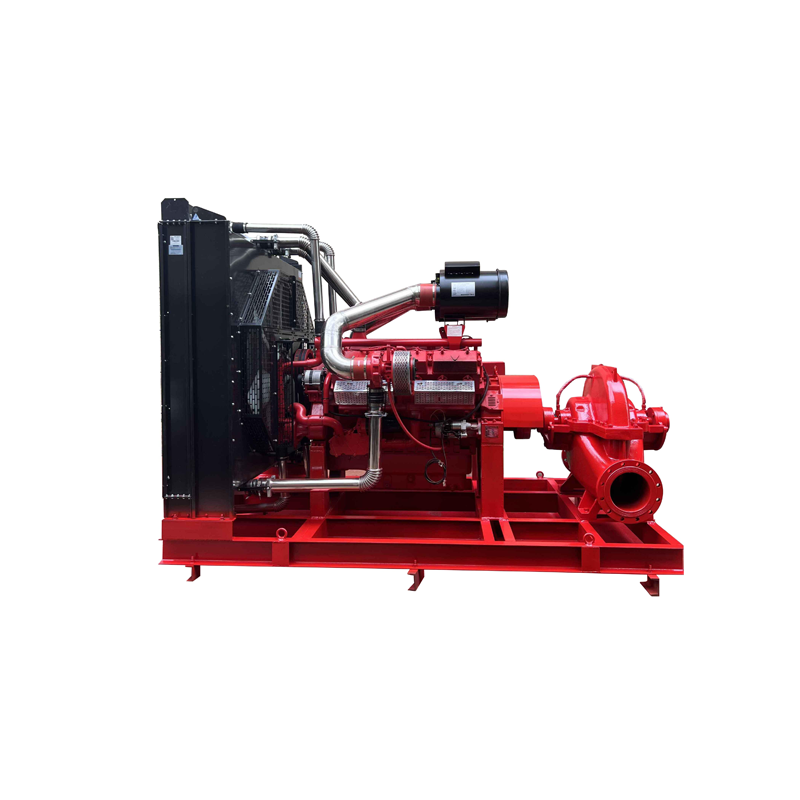
Selecting the right fire pump is a critical decision that can significantly impact safety and efficiency. Several factors come into play when making this choice, including building characteristics, system demands, and maintenance considerations.
Understanding the specific attributes of your building is essential. Factors such as height, occupancy type, and hazard classification shape the requirements for fire pumps. For instance, high-rise buildings may require pumps that deliver higher pressures to reach upper floors, while industrial facilities might need pumps capable of handling hazardous materials. Here’s a quick look at how these elements influence selection:
Building Characteristic | Consideration |
Height | Requires higher pressure and flow rates |
Occupancy Type | Determines potential fire load and response needs |
Hazard Classification | Influences the type of fire protection required |
Calculating the system demand is crucial for ensuring adequate water supply during emergencies. This involves assessing the maximum flow rates needed for sprinklers, standpipes, and other fire protection systems. Additionally, the condition of the water source—whether it's a municipal supply, tank, or well—affects pump selection. Accurate calculations help prevent undersized systems that could fail during a fire.
Consulting with fire protection professionals is vital when choosing a fire pump. Their expertise ensures that the selected pump meets all requirements and functions effectively within the building's fire protection system.
These experts provide valuable insights into the complexities of fire pump selection. They help assess system demands, evaluate building characteristics, and recommend appropriate pump types. Their experience ensures compliance with local codes and standards, such as those set by the National Fire Protection Association (NFPA).
Understanding the relevant codes is essential for installation and operation. NFPA standards outline the necessary safety measures and performance criteria for fire pumps. Compliance not only ensures legal adherence but also enhances overall safety. Here are some key considerations:
Code Compliance Aspect | Importance |
Installation Requirements | Ensures proper setup and functionality |
Maintenance Standards | Promotes reliability and performance |
Testing Protocols | Validates system effectiveness during emergencies |
Conducting thorough system demand assessments can help identify specific needs and challenges. This includes understanding local regulations that may dictate pump performance and installation practices. By collaborating with professionals, you can navigate these complexities effectively, ensuring that your fire protection system is robust and reliable.
In summary, choosing the right fire pump involves careful consideration of various factors. From building characteristics to professional guidance, each element plays a crucial role in ensuring safety and compliance. By prioritizing these factors, you can make informed decisions that enhance fire protection in your facility.
Regular maintenance of fire pumps is essential for ensuring their reliability and optimal performance. Just like any critical system, fire pumps require consistent care to function effectively during emergencies. Neglecting maintenance can lead to severe consequences, including equipment failure when it’s needed most.
A well-maintained fire pump operates efficiently, ensuring that water pressure and flow rates meet the demands of fire suppression systems. When maintenance is performed regularly, it helps identify potential issues before they escalate, allowing for timely repairs. This proactive approach enhances the overall reliability of the fire protection system.
Failing to maintain fire pumps can have dire consequences. Inadequate maintenance may lead to:
● Equipment Failure: A malfunctioning pump can result in insufficient water supply during a fire.
● Increased Repair Costs: Neglecting minor issues can lead to more significant, costly repairs over time.
● Legal and Safety Risks: Non-compliance with safety regulations can result in legal repercussions and jeopardize lives.
Establishing a routine maintenance schedule is vital for fire pumps. Regular inspections and testing ensure that the system remains in top condition. Here’s an overview of common maintenance practices:
Maintenance Activity | Frequency | Purpose |
Visual Inspections | Monthly | Check for leaks, corrosion, or damage |
Functional Testing | Annually | Ensure pump operates correctly under load |
Comprehensive Overhaul | Every 3-5 years | Replace worn parts and perform deep cleaning |
The National Fire Protection Association (NFPA) sets standards for the inspection, testing, and maintenance of fire protection systems. Adhering to NFPA 25 ensures that fire pumps are maintained according to industry best practices. Regular compliance helps facilities avoid penalties and ensures that they are prepared for emergencies.
Modern technology plays a crucial role in maintaining fire pumps. Monitoring devices and building automation systems can provide real-time data on pump performance. These systems can alert personnel to potential issues, such as:
● Pressure Drops: Indicating leaks or blockages in the system.
● Flow Rate Changes: Suggesting pump inefficiencies or mechanical problems.
● Temperature Variations: Highlighting overheating issues that may lead to pump failure.
By integrating these technologies, facilities can enhance their maintenance strategies, ensuring that fire pumps are always ready to perform when needed. This proactive approach not only improves safety but also extends the lifespan of the equipment.
This article discussed the four types of fire pumps: horizontal split case, vertical split case, vertical in-line, and vertical turbine pumps. Each type has unique advantages and applications, highlighting their significance in fire protection systems. It's essential to seek professional advice when selecting and installing fire pumps to ensure optimal performance and compliance with safety standards. Fire pumps play a crucial role in safeguarding lives and property by providing reliable water supply during emergencies.
For those interested in enhancing their fire protection systems, we recommend contacting fire protection professionals for assessments and tailored recommendations. We invite readers to share their experiences and questions regarding fire pumps, as your insights contribute to a better understanding of this vital safety equipment.
When considering fire pumps, look no further than Diequan. Their products offer exceptional reliability and performance, ensuring that your fire protection needs are met effectively. Diequan is dedicated to delivering value through innovative solutions and outstanding customer service.
A: The four types of fire pumps are horizontal split case, vertical split case, vertical in-line, and vertical turbine pumps. Each type serves unique applications in fire protection systems.
A: A fire pump increases water pressure and flow rates to deliver water effectively to fire suppression systems, ensuring adequate supply during emergencies.
A: Regular maintenance of fire pumps ensures reliability and performance. Insufficient maintenance can lead to equipment failure during critical situations.
A: Consider building characteristics, system demand, and space constraints when selecting a fire pump to ensure optimal performance and compliance.
A: Check for common issues like low pressure, unusual noises, or leaks. Regular inspections can help identify these problems early.


