

close
Choose Your Site
Global
Social Media


Views: 0 Author: Site Editor Publish Time: 2026-04-10 Origin: Site


Centrifugal pumps are the backbone of many industrial applications, ranging from water treatment and HVAC systems to chemical processing and fire protection. These pumps are designed to move fluids through a system using the centrifugal force generated by a rotating impeller. Whether you're an engineer, a technician, or just a curious beginner, understanding how centrifugal pumps work can significantly enhance your ability to design, operate, or maintain pumping systems efficiently.
In this guide, we will break down the core principles behind centrifugal pumps, explain their operational mechanisms, and highlight the factors that influence their performance. This guide is ideal for beginners who want to understand the importance and working of centrifugal pumps, and how they are utilized in various industries.
A centrifugal pump works on a fundamental principle: centrifugal force. When the impeller rotates, it accelerates the fluid outward from the center of the pump. The impeller is typically mounted on a rotating shaft, which is powered by a motor. As the fluid enters the pump casing, it is drawn toward the impeller’s center, which then pushes it outward due to centrifugal force. This action converts the mechanical energy of the rotating impeller into fluid energy in the form of increased velocity.
Once the fluid has gained velocity, it exits the impeller at a higher velocity and is forced through the pump casing into the discharge pipe. This increase in velocity results in an increase in the pressure of the fluid, depending on the design and the configuration of the pump.
Understanding the key components of a centrifugal pump is essential to grasp how it works. Each part plays a significant role in ensuring the pump operates efficiently and effectively.
Here are the key components:
Component | Function |
Impeller | The heart of the pump. It rotates to create the centrifugal force that moves the fluid. |
Casing | The outer shell that contains the impeller and directs the flow of the fluid. |
Shaft | The rotating part that connects the impeller to the motor, transferring mechanical energy. |
Seal | Prevents leakage of fluids around the shaft and ensures the pump remains pressurized and functional. |
Discharge | The pipe or opening where the pressurized fluid exits the pump after being accelerated by the impeller. |
Each component works in harmony to ensure the efficient functioning of the centrifugal pump. The impeller generates the energy needed to move the fluid, while the casing helps to direct it towards the discharge point.
Centrifugal force is what drives the fluid out of the pump. When a fluid enters the pump, it is at rest or moving at a low speed. The impeller accelerates the fluid, causing it to gain speed as it moves outward. This increase in speed converts into an increase in pressure, pushing the fluid to the discharge pipe.
This mechanism of using centrifugal force is highly effective because it allows for continuous flow, making centrifugal pumps suitable for a wide range of applications. From pumping water in municipal systems to transferring chemicals in industrial settings, centrifugal pumps can handle a variety of fluids and processes.
The operation of a centrifugal pump can be broken down into a series of steps. Understanding this flow of fluid is crucial to comprehending how centrifugal pumps function in real-world applications.
Fluid Intake: The fluid enters the pump through the suction side. The suction is created by the rotating impeller, which creates a low-pressure zone at the center of the impeller.
Acceleration: Once the fluid reaches the impeller, the rotating blades accelerate it outward. The impeller blades force the liquid to move radially (from the center to the outer edges), causing it to gain velocity.
Energy Conversion: The rotational energy of the impeller is transferred to the fluid. As the fluid gains speed, the kinetic energy is converted into pressure, which is what pushes the fluid through the system.
Fluid Discharge: The accelerated fluid exits the impeller at high velocity, and it is then directed into the discharge pipe. The fluid is now under higher pressure and velocity compared to when it entered the pump.
Priming the Pump: Before the pump can operate effectively, it needs to be primed. Priming refers to the process of filling the pump casing with fluid to prevent air from entering the system. If the pump is not primed, it can cause cavitation or airlock, which affects its performance.
Priming is a critical process in centrifugal pump operation. It involves ensuring that the pump casing is filled with liquid before the pump starts, which prevents the formation of air pockets inside the system. If air is present in the pump, it can lead to cavitation, where vapor bubbles form inside the fluid. These bubbles can cause damage to the pump components and reduce efficiency.
There are two primary methods of priming:
Self-Priming Pumps: These pumps have a built-in mechanism that allows them to remove air from the pump casing and replace it with liquid. They are ideal for applications where the pump may run dry briefly, as they can quickly prime themselves without external assistance.
External Priming Pumps: These pumps rely on an external source of liquid to fill the pump casing. An external priming system is often used when the pump is located above the liquid level, or if it is necessary to ensure complete priming.
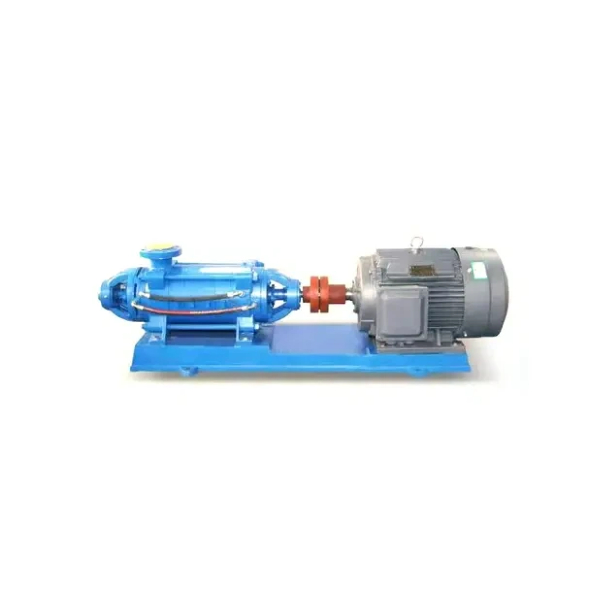
Centrifugal pumps come in various types, each designed for specific applications. Let’s explore the different types and their unique characteristics:
Single-Stage Pumps: These pumps consist of a single impeller and are used when a low to moderate pressure is required. They are commonly used in domestic water systems, small industrial applications, and HVAC systems.
Multi-Stage Pumps: These pumps have multiple impellers arranged in series. Multi-stage pumps are ideal for applications where high pressure is needed. They are commonly used in fire protection systems, boiler feedwater pumps, and other high-pressure applications.
Pump Type | Stages | Application |
Single-Stage | 1 stage | Domestic water systems, irrigation, HVAC, small industries |
Multi-Stage | 2+ stages | Fire protection, boiler feedwater, high-pressure pumping |
Radial Flow Pumps: The fluid flows perpendicular to the shaft of the pump. These pumps are most commonly used for high-pressure applications.
Axial Flow Pumps: The fluid flows parallel to the shaft. These pumps are suitable for applications that require high flow rates but low pressure.
Mixed Flow Pumps: These pumps combine both radial and axial flow principles, offering a balanced performance in both high flow and moderate pressure applications.
Centrifugal pumps are widely used in various industries due to their versatility and efficiency. Let’s look at the most common applications where centrifugal pumps are crucial:
Water Treatment: Centrifugal pumps are used in water treatment plants to move water through filtration and purification processes.
Fire Protection: Many fire suppression systems use centrifugal pumps to provide the required water pressure for firefighting operations.
Chemical Processing: In the chemical industry, centrifugal pumps are used to transport chemicals, acids, and other hazardous fluids.
Agriculture: These pumps are used in irrigation systems to move water efficiently to crops.
HVAC Systems: Centrifugal pumps are essential in heating, ventilation, and air conditioning (HVAC) systems, helping circulate coolant or air.
Choosing the right centrifugal pump for your application is crucial to ensuring efficiency and longevity. Below are key factors to consider:
The flow rate (measured in gallons per minute or liters per second) and head (measured in feet or meters) are critical parameters to determine the required pump size. The flow rate tells you how much fluid needs to be moved, while the head indicates how high the pump needs to lift the fluid.
When selecting a centrifugal pump, consider the type of fluid being pumped. Some fluids, such as chemicals or abrasives, may require special materials for the impeller, casing, and other components to prevent corrosion or wear.
Efficiency is a key consideration for reducing operational costs. Centrifugal pumps should be chosen based on their energy efficiency, as pumps with higher efficiency reduce electricity consumption and operational costs.
Understanding how a centrifugal pump works is crucial for industries that depend on fluid movement, whether it's for water supply, chemical processing, or fire protection. These pumps are essential tools, offering dependable performance across various applications. By familiarizing yourself with their core principles, components, and functions, you can ensure that these pumps are operated efficiently and safely.
At Shanghai Diequan Water Pump (Group) Co., Ltd., we specialize in providing high-quality centrifugal pumps tailored to meet the needs of diverse industries. Our team is dedicated to offering expert advice, helping you select the right pump solutions for your specific requirements. Whether you're looking for a centrifugal pump for industrial processes, water treatment, or HVAC systems, we are here to guide you through every step. Feel free to reach out to us for personalized support and to learn more about how we can help improve the efficiency and reliability of your pumping systems.
1. What is the difference between centrifugal pumps and positive displacement pumps?
Centrifugal pumps move fluid by converting kinetic energy to pressure, while positive displacement pumps move a fixed amount of fluid with each cycle, ensuring a consistent flow rate.
2. Can a centrifugal pump handle viscous fluids?
Centrifugal pumps are typically not suited for very viscous fluids, as their performance can be significantly reduced. Positive displacement pumps are better for such applications.
3. Why is priming important for centrifugal pumps?
Priming ensures that the pump is filled with liquid before operation, preventing air from causing cavitation or damage to the pump components.
4. What are the signs that a centrifugal pump needs maintenance?
Decreased flow rate, unusual noise, or visible leaks are signs that the centrifugal pump may need maintenance.
5. How can I increase the efficiency of a centrifugal pump?
To increase efficiency, ensure the pump is properly sized for the application, use energy-efficient models, and regularly maintain the pump to avoid wear and tear.


